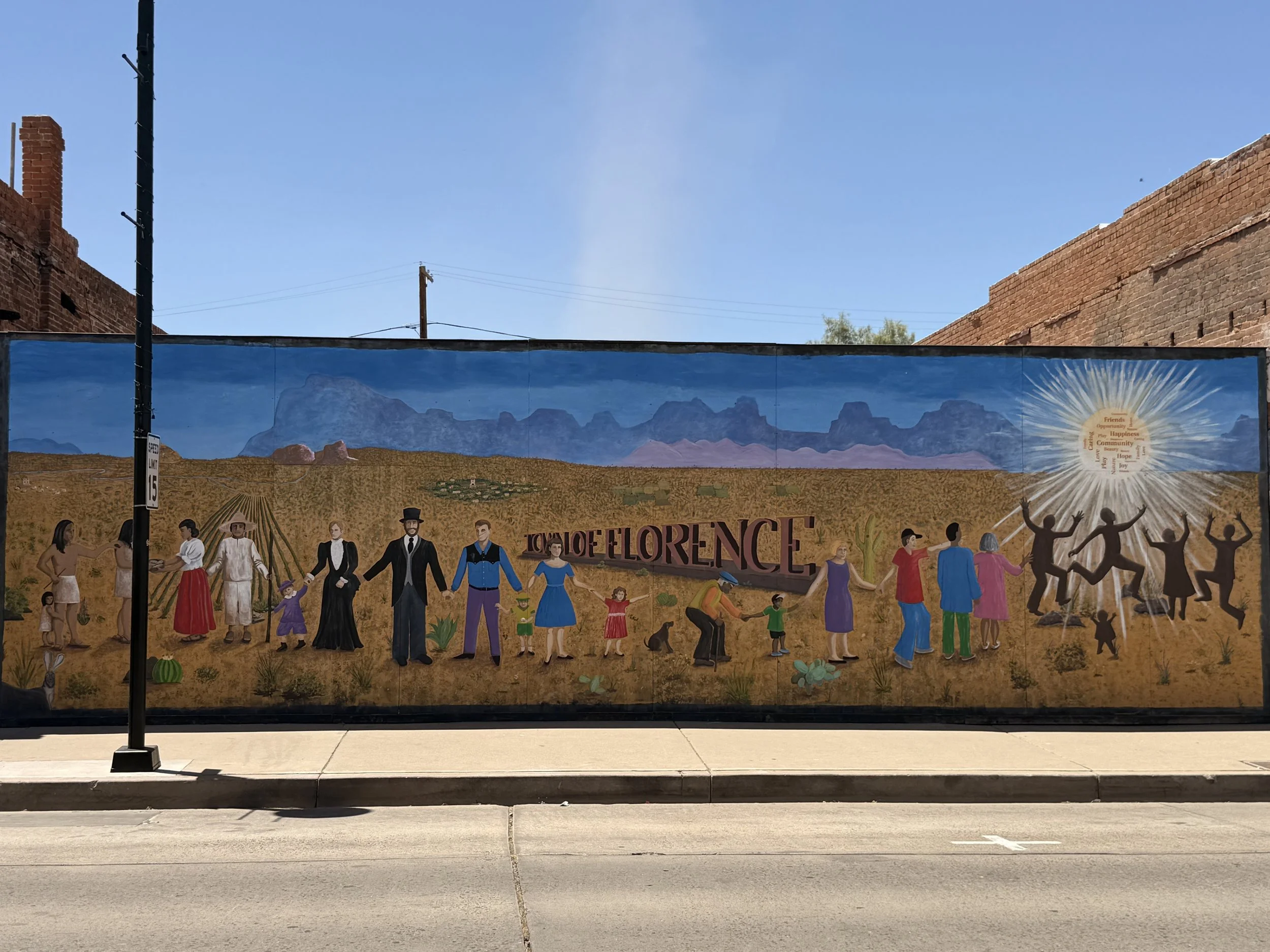
Time Needed in this town: 1-2 hours
What was once a thriving mining town has become a well-preserved historic stop on the way to Tucson. With turn-of-the-century architecture, mom-and-pop shops, and some great coffee shops, it’s worth stopping for an hour!
The below information is a complete guide of the best places to stay, the top rated places to dine and drink, and all there is to see and do. We’ve also included a summary of the history of this small western time capsule.
Jump To:
Where to Stay
I wouldn’t recommend staying in Florence but instead, in Tucson as it’s only a 45 minute drive.
Where to Dine & Drink
Florence Fudge Shop & Cafe
Their fudges are handcrafted in small batches using only the finest ingredients, while their sandwiches feature premium meats and cheeses served on your choice of bread or bagel.
Mt Athos Restaurant & Cafe
Laid-back dining spot providing familiar Greek eats such as gyros & souvlaki, plus burgers & pasta.
Sweet P’s
A candy store and boutique with a variety of gift items, nostalgic candy/soda, clothing, and more!
The Irish Cowboy
Casual eatery and bar for burgers, fish-and-chips, tacos and beers in an Irish pub-style setting.
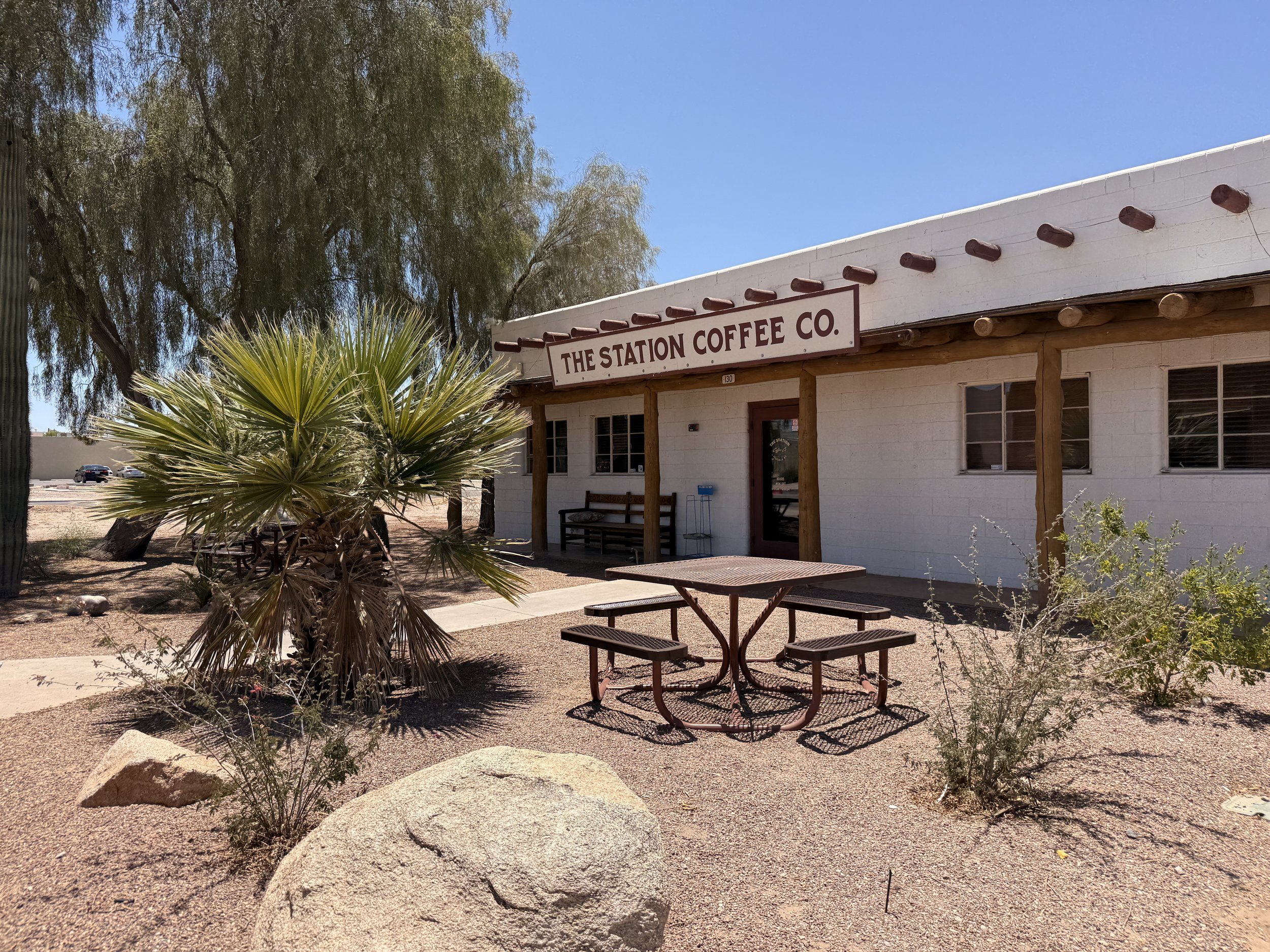
The Station Coffee Co.
Relaxed coffeehouse dishing up lattes, cappuccinos, and other beverages, plus pastries.
The Windmill Winery
Serving wine tastings and light bites.
Your Behind BBQ Birds And Bones
Serving BBQ cuisine.
Things to See & Do
Historical Exploration
Brunenkant’s City Bakery
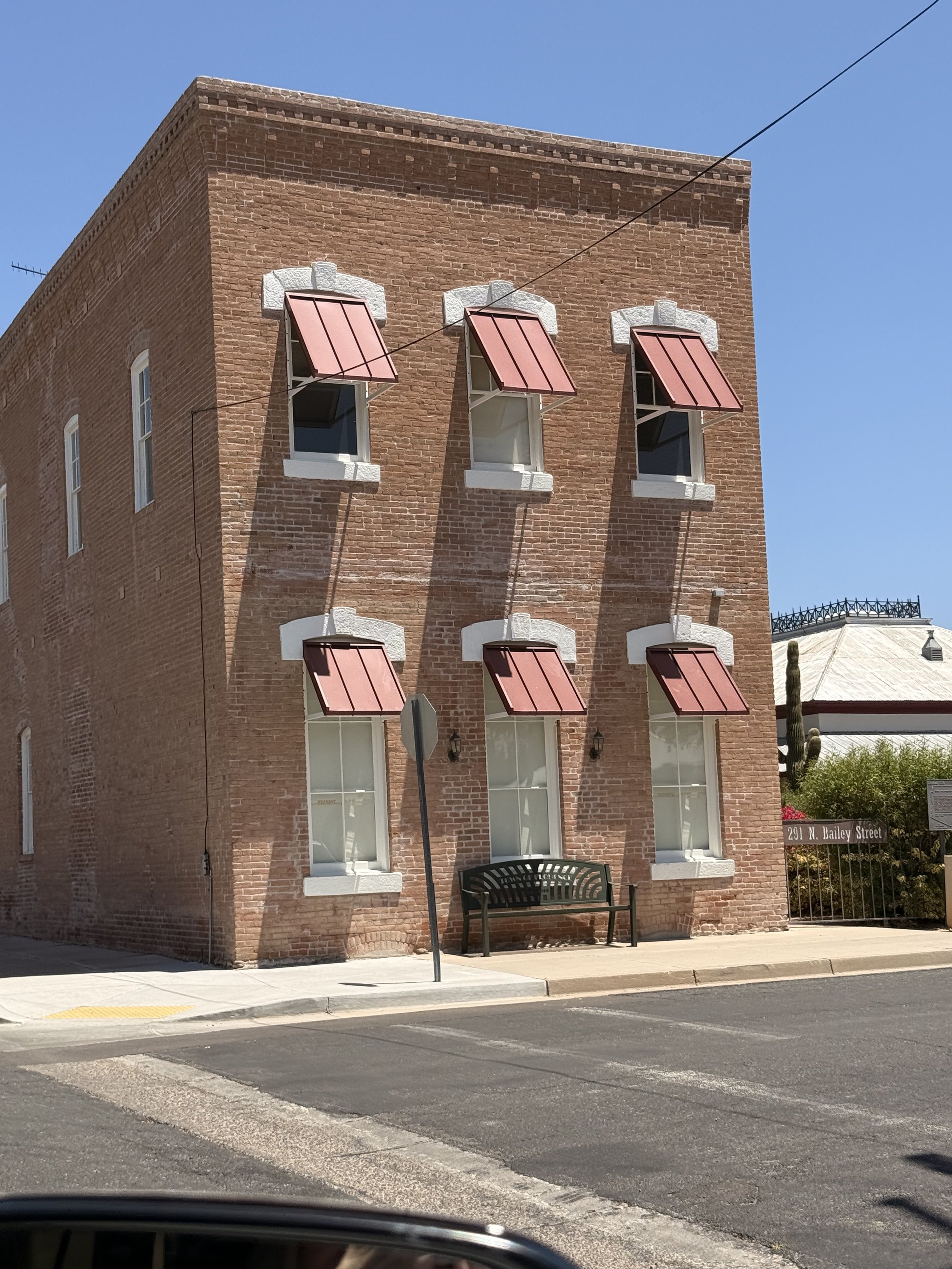
Originally built in 1890 by Dutch-born baker and grocer, Conrad Brunenkant, the building is now a designated landmark that frequently serves as the home for the Florence Chamber of Commerce.
Main Street
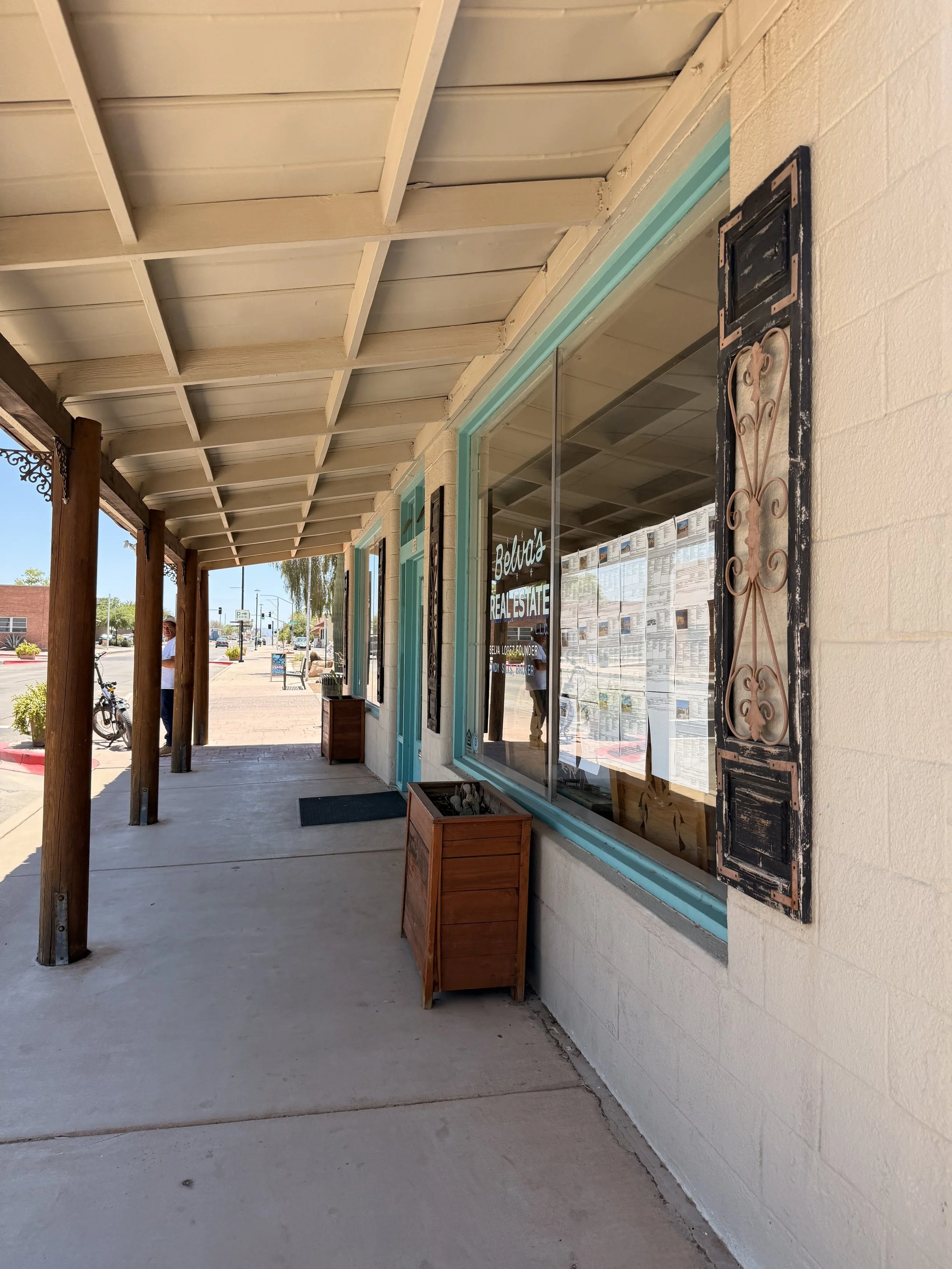
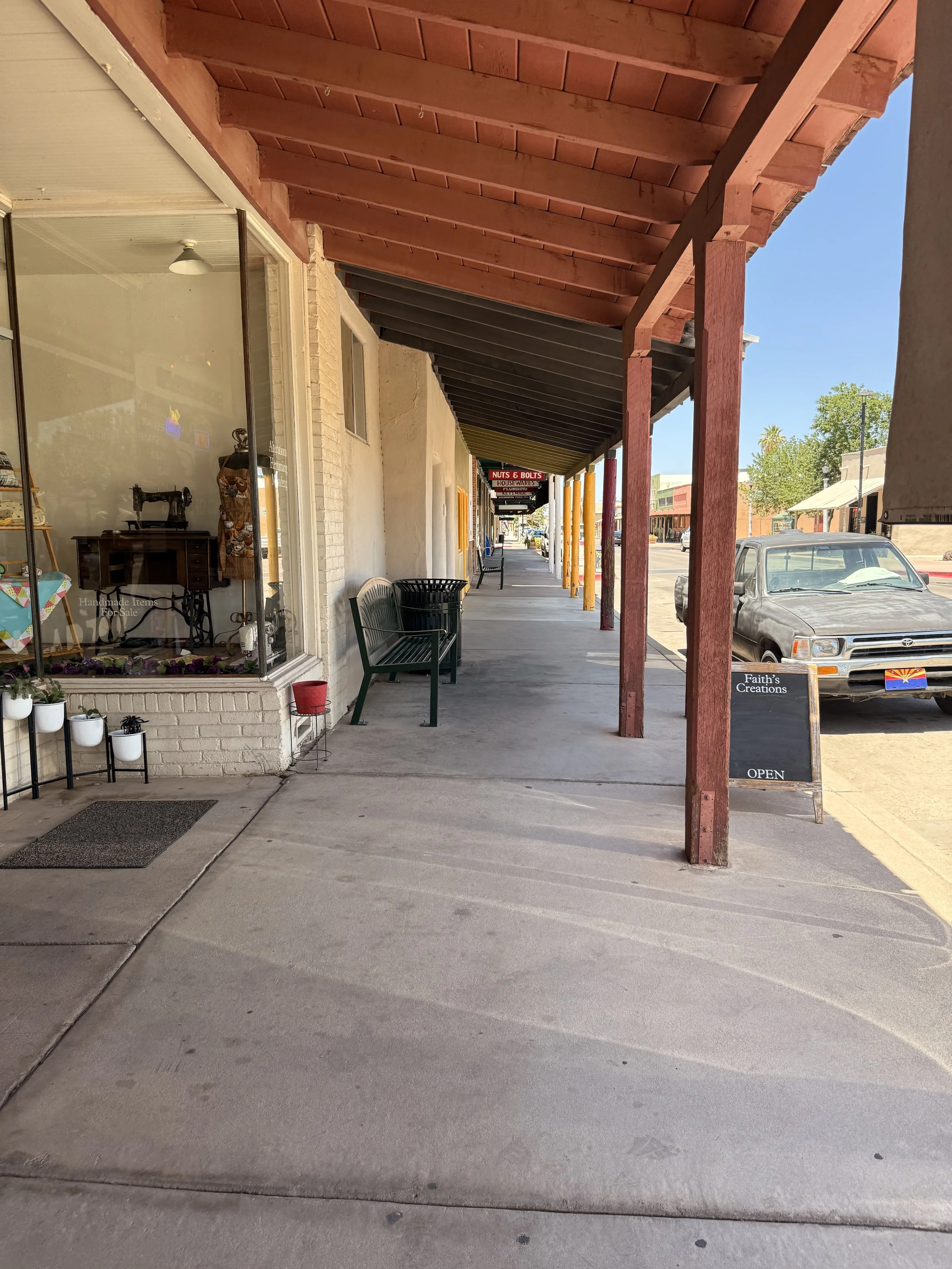
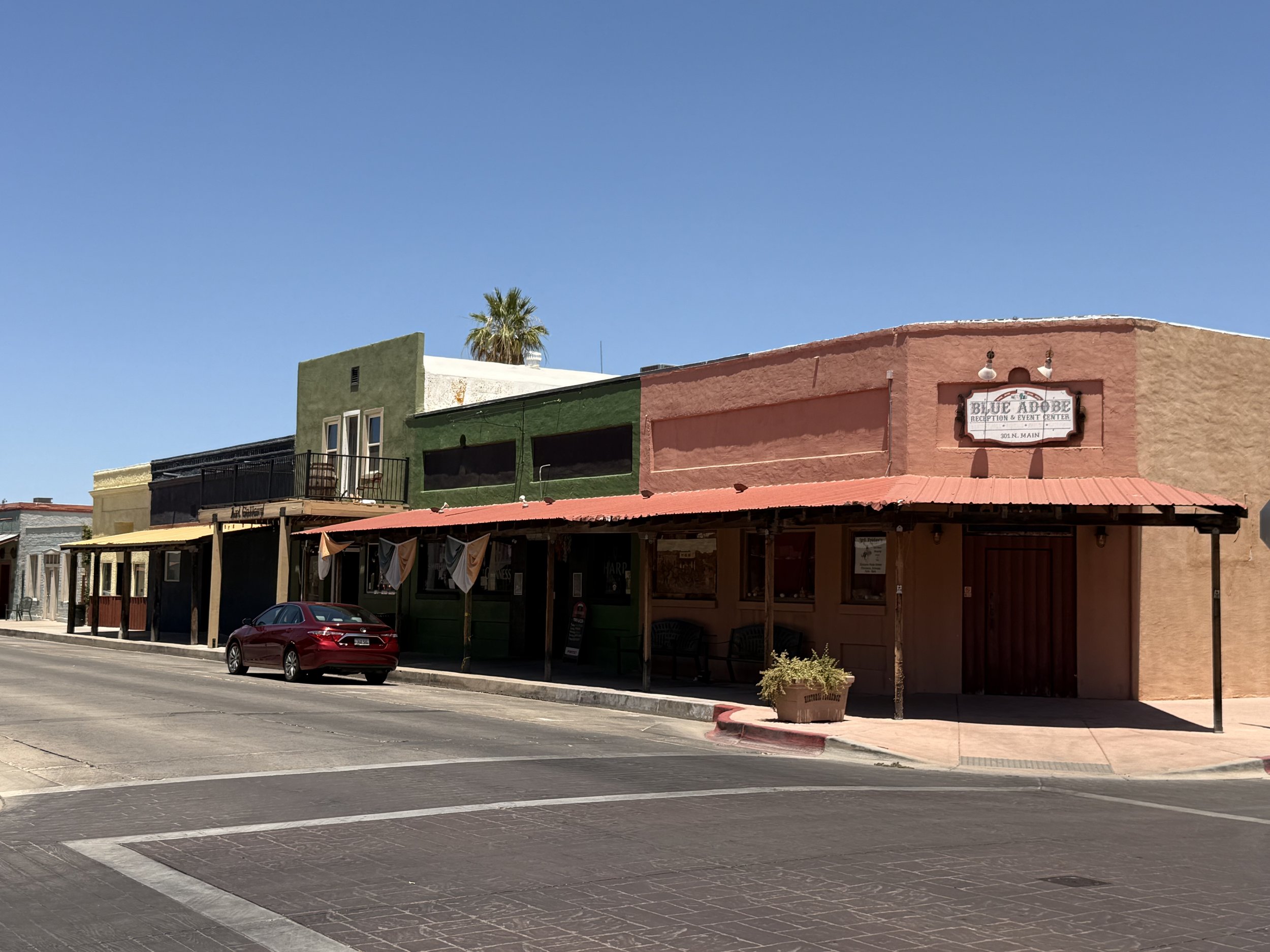
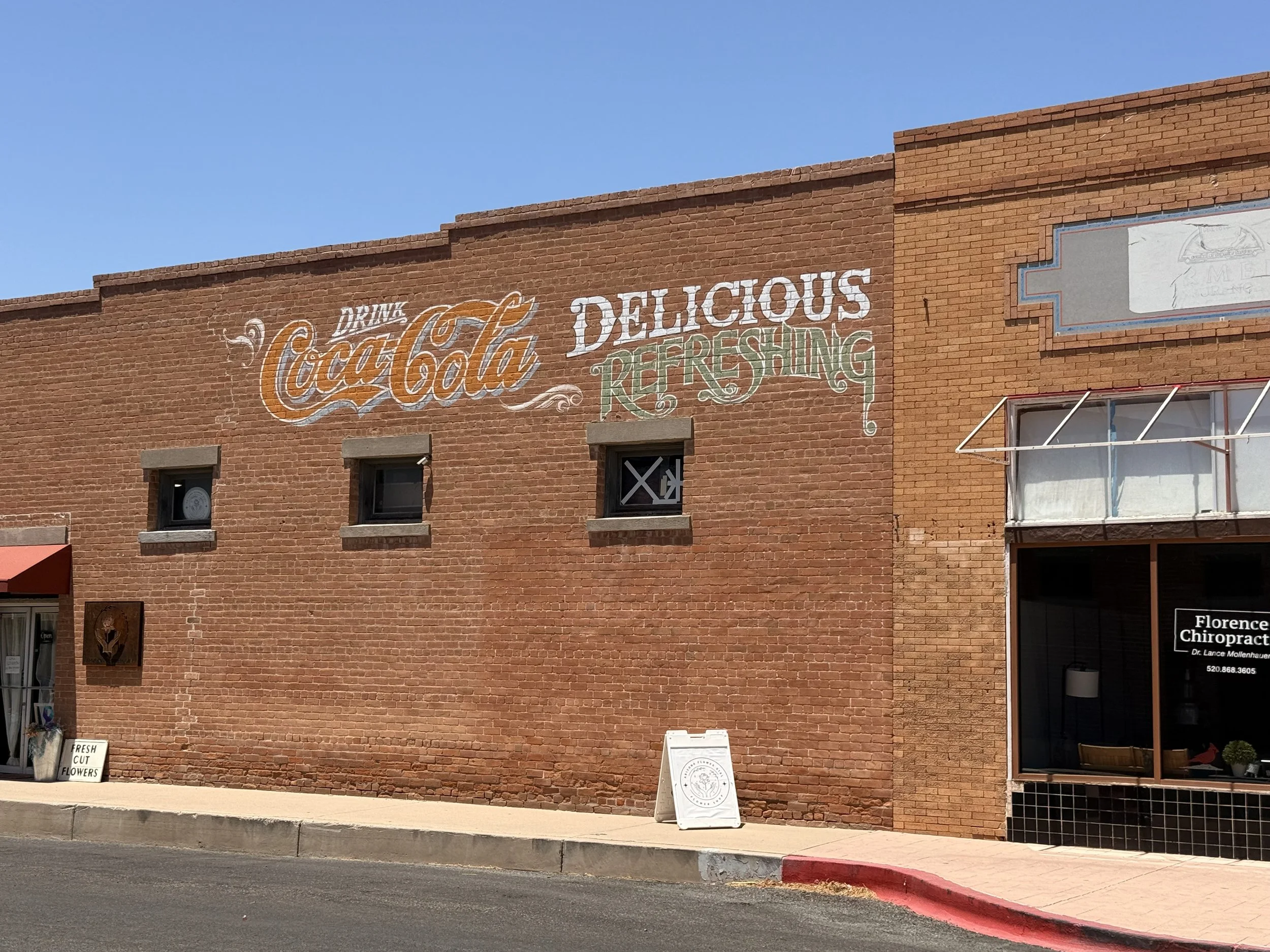
While there isn’t a ton to see in Florence, there are some places worth stopping in:
1866 Store - This charming store and tea house offers an exquisite selection of teas and coffees, inviting you to step into a world of curated tastes and aromatic delights.
Florence Visitors Gift Shop - Sells an assortment of gifts from local artisans, musicians, authors, photographers, and crafts-people.
Rail Three Ranch - Per their site, “Rail Three Ranch is a small, family-owned business named after our brand, the “Rail Three” and our ranch, Rail Three Ranch… We offer quality handcrafted leather goods to our wonderful customers. “
Ruggiero's Ace Hardware - A historic small town hardware store.
Sweet P’s - A candy shop and boutique that is well-worth the stop!
Silver King Hotel (Marketplace)
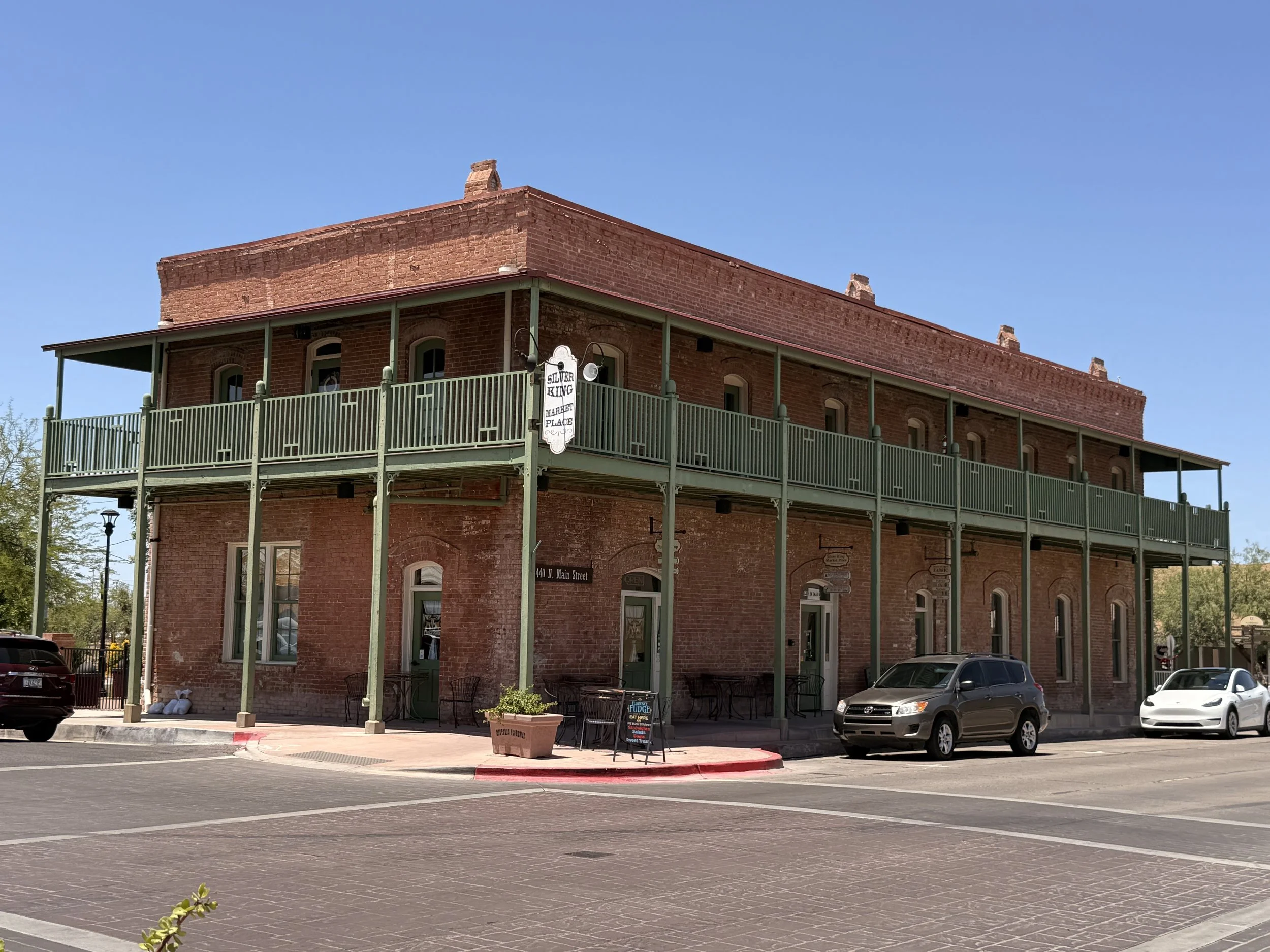
Now the home of the Silver King Marketplace, the Silver King Hotel was initially constructed in 1876 by William Long. In 1890, it was renamed the Florence Hotel and in 1895 a fire destroyed a portion of the hotel, which was replaced by the two-story fired brick east wing. A covered arcade was later attached to the east wing, and a second story added to the west wing in 1917. The Florence Hotel was a social focal point, offering the finest in dining and accommodations. It is listed on the National Register of Historic Places.
The Pinal County Historical Museum
Established in 1958, the Pinal County Historical Museum is the oldest historical organization in Pinal County. They preserve the fascinating history of Florence and Pinal County through exhibitions and educational programming. Their museum houses a diverse research collection, providing opportunities for academic and community-based research.
Artifacts include state prison artifacts, as well as Western actor, Tom Mix artifacts (he was born and died in Florence).
William Clark House
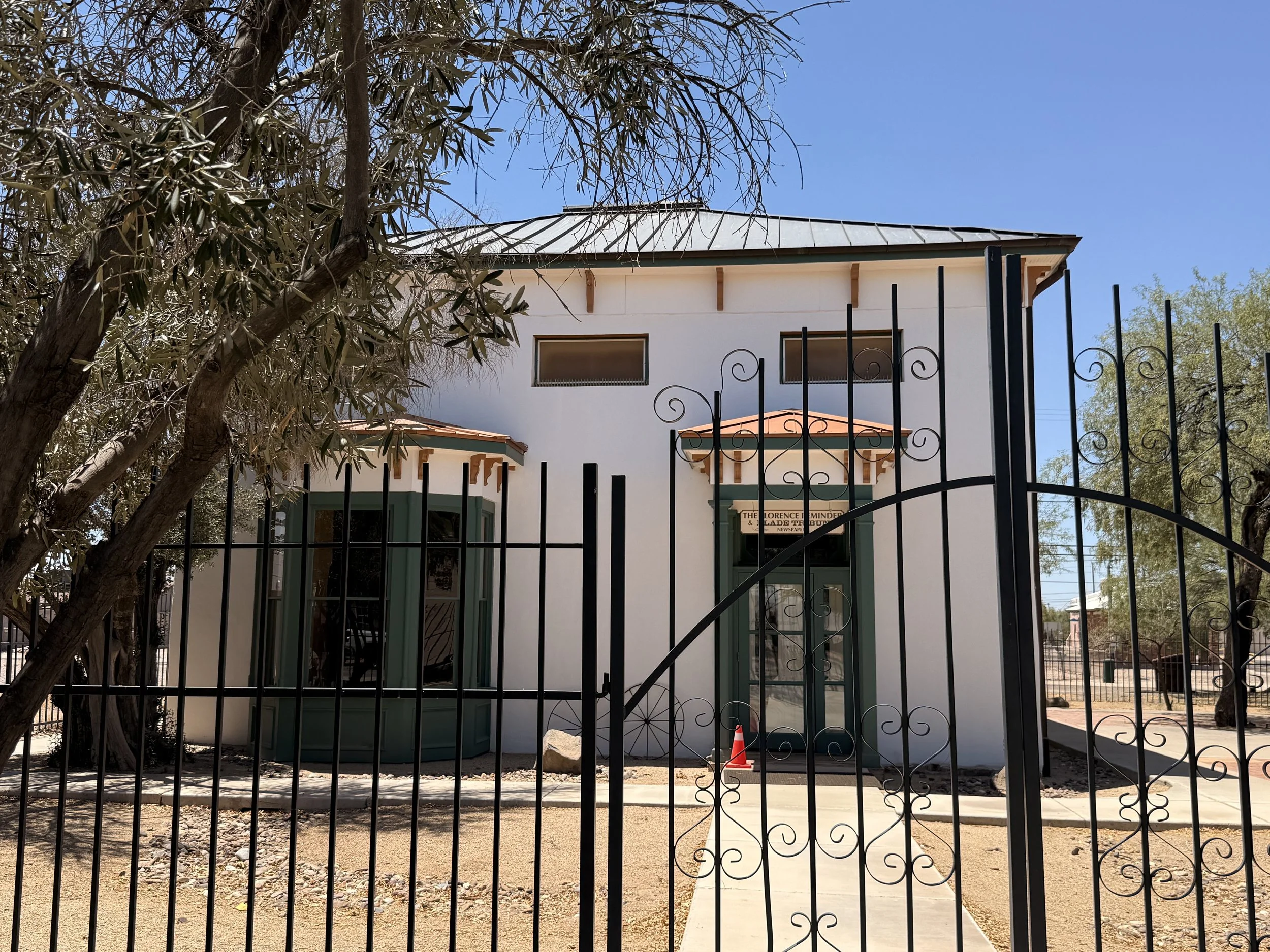
Built in 1884 for Silver King mining engineer, William Clark and his bride-to-be, Ella, the Clark House was a focal point in Florence due to it being a social and musical hub, with recitals, a literary society, and it hosting opera singers. The olive trees currently standing in front of the Clark House are said to be 100 years old and originally planted as seeds from California.
Later, the Clark House was inhabited by Richard E. Sloan, a judge and Arizona’s last Territorial Governor. It was last inhabited by Ella Clark’s nephew, Knott Guild, who died in the house in 1956. After that, it was left vacant until the 1994 when much of it had collapsed. Thankfully, the Town of Florence received a $105,000 grant from the Arizona Heritage Fund Historic Preservation program to stabilize the building.
The Florence Preservation Foundation took part in saving this building, documenting its original fabric, in conjunction with a registered architect, and allowing for accurate reconstruction of the dilapidated building. The State Historic Preservation Office, through the Heritage Fund, obtained the grant to help document the existing structure before it was lost through any rehabilitation/reconstruction efforts.
Religious History
St. Anthony’s Greek Orthodox monastery
St. Anthony's Greek Orthodox Monastery is a Greek Orthodox monastery in the Sonoran Desert outside Florence, Arizona, United States. It was established in 1995 in the name of Saint Anthony the Great and is the largest Orthodox monastic complex in the Western Hemisphere.
The blessed Virgin Mary Catholic Church
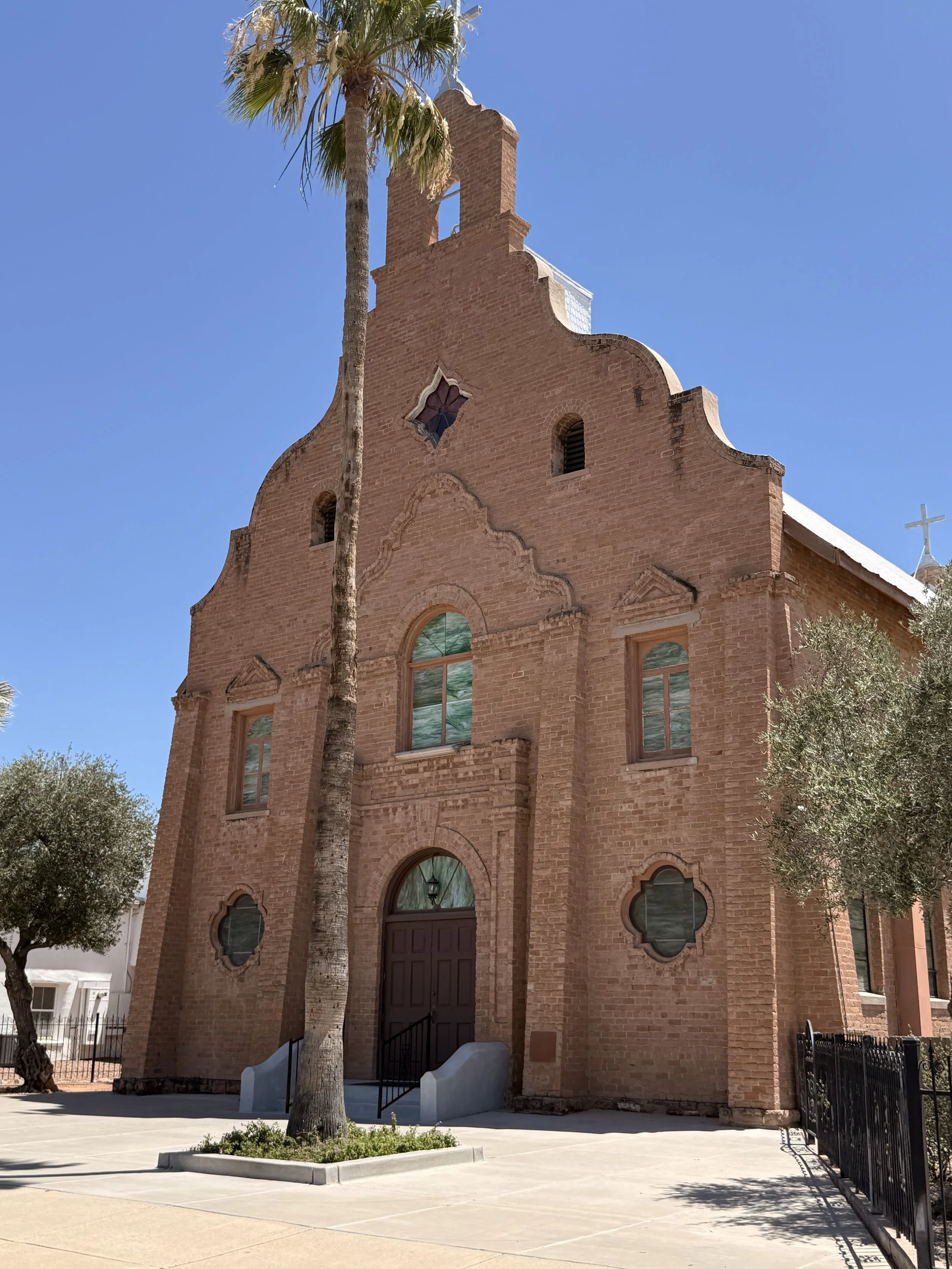
Completed in 1912, the Church of The Assumption is an example of the Mission Revival style of architecture. The third church built for Assumption Parish, it replaced the second church built on this site in 1884, which burned down in 1893. This church was designed under the direction of the parish priest Father Henry Heitz, the last of a long line of French-born priests in Florence.
The Arts & Sciences
Tom Mix Monument
Situated midway between Florence and Oracle Junction, is a remote roadside park containing a monument to cowboy, actor, and Western star Tom Mix who died in a car crash (about 100 yards to the south of it) in 1940.
TIP: One of the covered picnic tables, next to the monument, displays memorabilia about Mix, including copies of newspaper accounts of his death and a register for guests to sign.
FUN FACT
The following movies were filmed here:
Murphy's Romance (1985)
Raising Arizona (1987)
Stir Crazy (1980)
The War of the Worlds (1953)
A History Summary
829 AD - This area was originally occupied by the Hohokam, who provided the area with the first irrigation networks that brought water from the Gila River to their farming communities nearby.
1848 - 1854 - At the end of the Mexican-American War in 1848, the Gila River was utilized as the border between the newly acquired American Southwest and Mexico. It was like this until the Gadsden Purchase of 1854 when the state’s southern border was moved to where it is today.
1866 - Colonel and Civil War veteran Levi Ruggles came to Arizona as a US Indian Agent. As he was traveling along the Gila River, he found an area that was shallow enough to establish a fordable crossing. Seeing the area’s potential, Ruggles purchased the land along the river and laid out a townsite that was divided into 125 square-foot blocks, giving birth to the town of Florence.
1869 - A post office was established with the town’s first mail delivery occurring in September of that year, via a horseback rider from the Blue Water Station some 25 miles away on the Overland Stage road. Ruggles would build both his first home and a general store that same year.
1870 - A man named Fred Adams would found a farming community called Adamsville, a couple of miles west of the Florence townsite. It flourished, though quickly abandoned in the first decade of the 1900s, due to the Gila River flooding. Also, The Assumption of the Blessed Virgin Mary Roman Catholic Church was built in this year.
1875 - The Silver King Mine was established, which was once the richest silver mine operation in Arizona, producing high-grade silver ore along with gold, copper, lead, and zinc.
1880s - A canal was built to divert water from the Gila River for irrigation, which helped make the town of Florence thrive.
1882-1910 - Cuen House and Butcher Shop Building was built.
1884 - William Clark built his Florence house to more effectively manage the Silver King Copper mine (when he wasn’t in Jerome).
1887 - The Florence highschool was built.
1888 - One of the most notable gunfights in the Old Southwest occurred in Florence. Sheriff Pete Gabriel hired 39 year-old Joseph (Joe) Phy as his deputy in 1883. Gabriel decided not to run for sheriff in 1886 and supported his deputy, Phy, for the job. Later Gabriel withdrew his support because of personal differences with Phy. The two friends became bitter enemies and had a confrontation on May 31, 1888, in the Tunnel Saloon. A gunfight ensued and spread to the street. Both men received gunshot wounds. Phy died a few hours after the gunfight, but Gabriel survived the encounter and died 10 years later. Also, the First Presbyterian Church was established.
1889 - The Silver King mine closed.
1890 - 1930s - The City Bakery was opened by German man, Conrad Brunenkant (it was also used as a grocery store until the 1960s, was Dr. Adler’s office on the second floor until 1892, had hotel rooms from 1898 - 1910, and was used as meeting rooms from 1914 until 1941).
1891 - Pinal County Historic Second Courthouse was built, which became the site of where the trials of three notorious women were presented, including Pearl Hart, Eva Dugan, and Winnie Ruth Judd, known as the "Trunk Murderess".
1908 - 2022 - The state prison was built in 1908 and used until 2022 when the operating costs became too high.
1909 - The Yuma Territorial Prison (memorialized in the movie '3:10 to Yuma') was closed and the inmates relocated to the new Florence Territorial Prison.
1910-1940 - The butcher house was converted to a telephone operator switchboard building.
1914 - Florence Women’s Club was established.
1932 - Local ranchers established the Florence Junior Parada, which remains the world’s oldest sanctioned youth rodeo.
1940 - Actor and Native Florence resident, Tom Mix, died in a crash, in Florence.
1995 - St. Anthony’s Greek Orthodox Monastery was built.
2020 - Florence had 26,785 residents.
