Nestled in the Mule Mountains, Bisbee is a rarity of a town. It’s historic, it’s surprisingly big (great for getting in steps while exploring), it’s well-kept, and it’s located just minutes from other little mining towns that are worth exploring as well.
Like any other small mining town, it has a storied history. While famous for being more “cosmopolitan” than Tombstone, it still has its own haunted past that paranormal teams love to investigate, especially around Halloween.
Not into ghost sightings? There are plenty of shops, bars, restaurants, and artwork in the town, as well as a copper mine, Lowell, Warren, Douglas (and more) to explore around it, still making it a great place to spend a weekend!
TIP: Check calendars of when things are open. For example, we went for a long weekend from a Tuesday to a Friday and nearly everything was closed until Thursday with some shops not opening until Friday.
How many nights needed in this TOWN: a LONG Weekend
Jump To:
Where to Stay
Per their website, “In 1914, local business man, James L Brooks constructed the Brooks Apartments on OK Street for a cost of $20k… The Brooks Apartment house was home to “respectable society” who reveled in the spacious verandas, private entrances, concrete floors, and large partitions that distinguished it from the shared spaces that were offered in boarding houses at the time.”
Nearly a century later, it was bought, restored/renovated, and turned into one of the best stays in Bisbee.
For our stay, we chose a suite (suite 8) because it had a kitchen (which was very well-appointed), allowing us to prepare meals when their restaurants and cafes are closed (which is quite a bit on week days). What we didn’t know is that we would be “treated” to a one-bedroom apartment with two verandas for relaxing on - one by the front door to take in great views of the town and one in the back, off of the bedroom if you prefer waterfall sounds.
The owners of the hotel are incredibly warm and friendly people who really do make your stay as memorable and comfortable as humanly possible. It’s because of them that we checked out knowing we would never stay anywhere else in Bisbess when we come back.
BONUS: Each room gets one parking space, which is hard to come by in Bisbee! Also, it’s pet-friendly! The first floor has pet-friendly suites, which is great, since the town is very dog-friendly.
Other Places to Stay
Haunted Places to Stay
Bisbee has no shortage of ghostly residents, many of which “reside” at Bisbee hotels. Take a look at the list below!
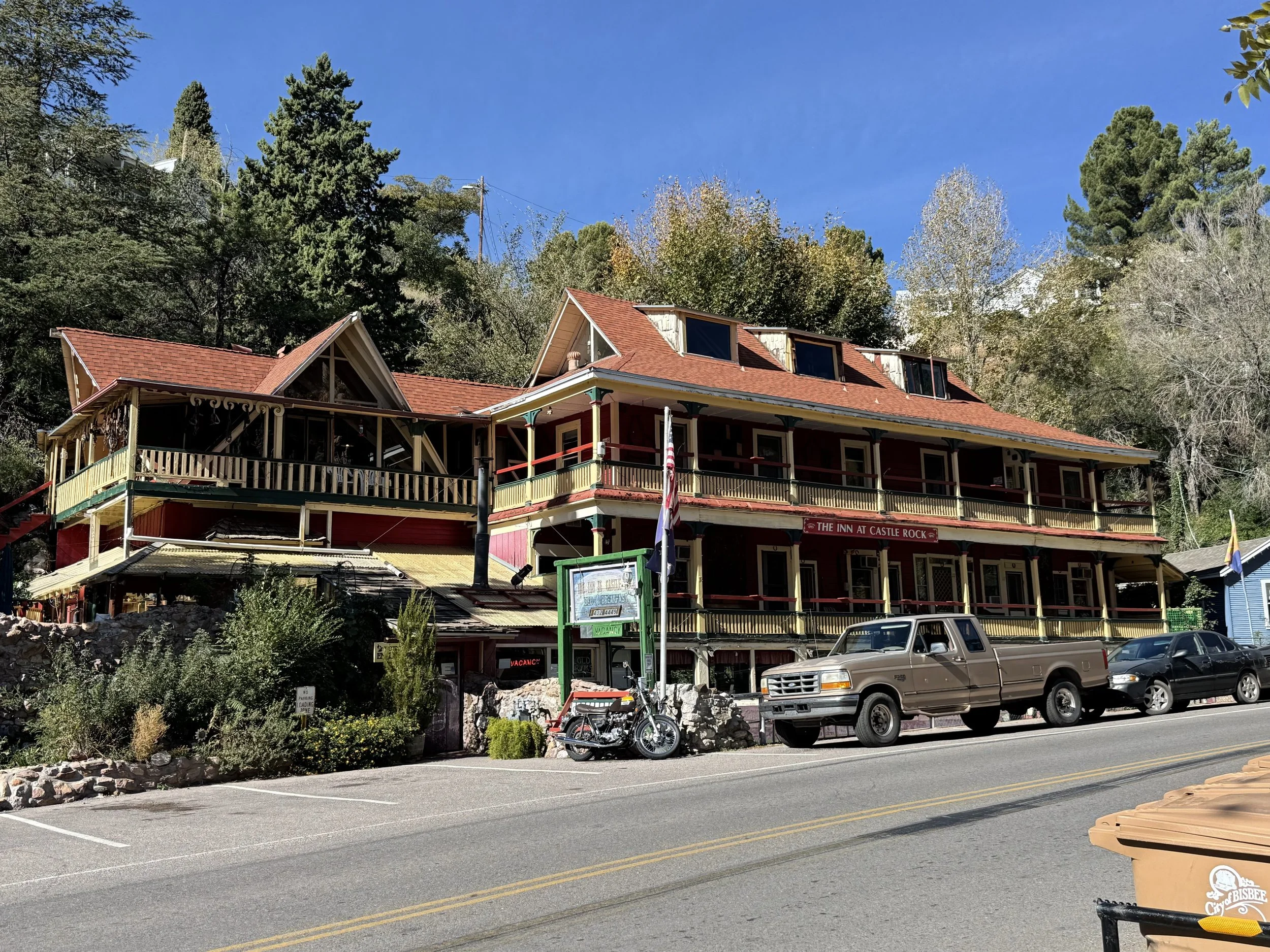
The Inn at Castle Rock
The Oliver House (one of the most haunted hotels in the state)
Where to Dine & Drink
26 Souls (speakeasy)
Located inside The Oliver House, our Bisbee Speakeasy will transport you back in time–and give you a glimpse inside Bisbee’s famously historic Oliver House. Our beer & wine bar features an enchanting menu of mead, house-made cocktails, and premium wine and beer. There’s something for everyone–even mocktails and a few snacks.
Why 26 Souls? Click here to learn more.
Allen & Co Coffee Shop
Friendly coffee shop decorated with artworks and serving homemade fare.
Bisbee badassery
Cool biker-themed restaurant with a gift shop, an ice cream parlor and a patio. Burgers are a specialty, along with sandwiches and salads.
Bisbee Breakfast Club
Bisbee Good Cakes
Friendly bakery churning out tasty cakes (chocolate, vanilla, etc) cookies and pizza. (They do have gluten-free options.)
Bisbee Social Club (Speakeasy)
Casual, beer-serving, down-to-earth bar featuring cocktails, pool tables and games, plus live music.
Dot’s Diner (LOWELL)
Breakfast, plus burgers, tacos, and other comfort food served in an informal setting with entertainment.
Earl’s Cafe @ Warner Hotel
Named after Van Norman's grandfather Earl, the café is the social heart of the Warner. Set in the original dining room and kitchen — now opened into a grand dining space with atrium plants and indoor trees — it serves Central American grown coffee beans roasted locally, and small bites. Open every day, with live music on weekends.
High Desert Market Cafe
Casual cafe featuring gluten-free baked goods, sandwiches and pizza, plus gourmet groceries, beer and wine.
Le Cornucopia Cafe
Cozy bistro, open for breakfast, lunch and dinner, featuring homemade sandwiches, soups, pies and cakes, along with other desserts.
Old Bisbee Roasters
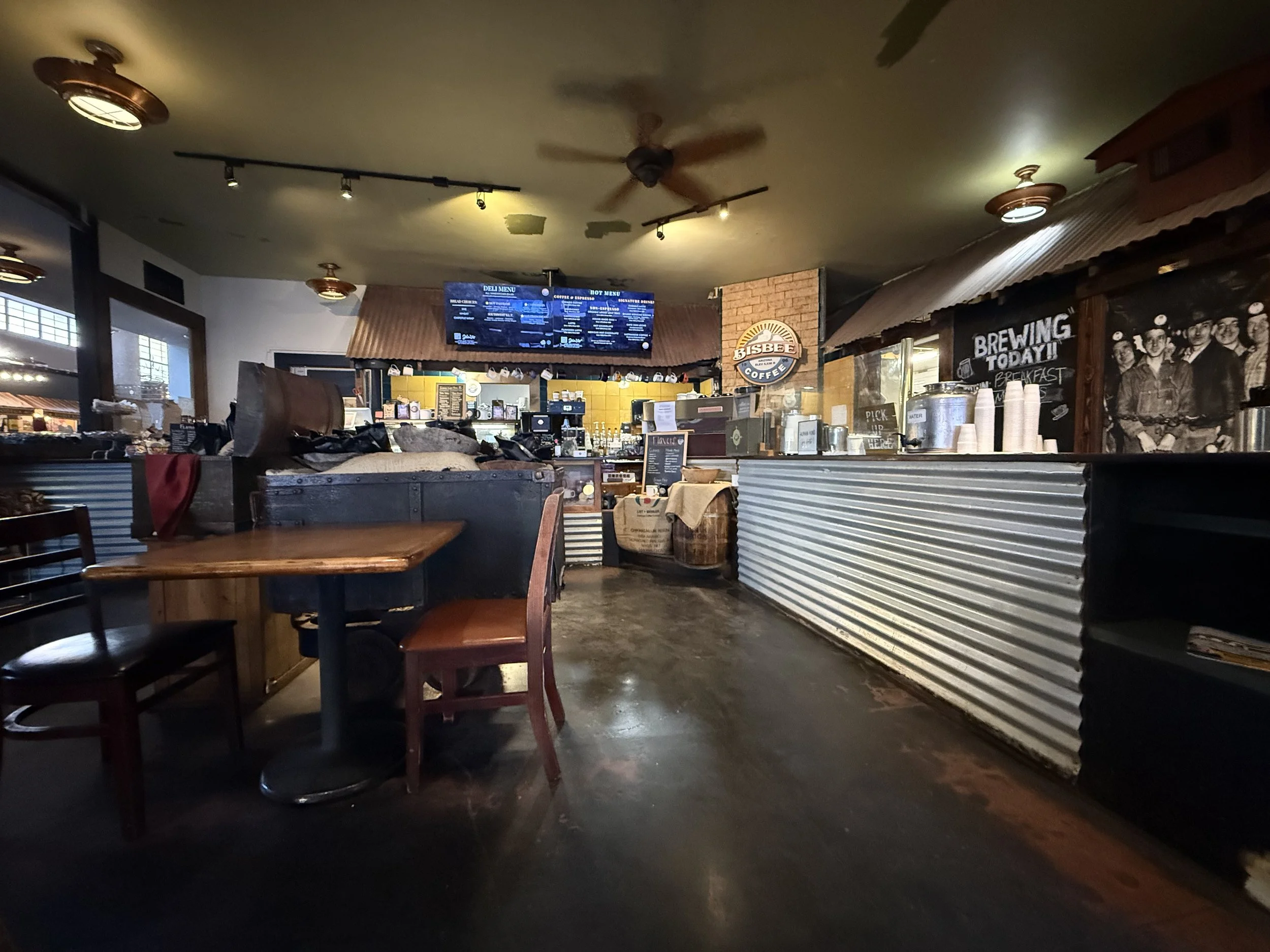
Roasting specialty coffees produced by small farms and co-operatives using sustainable agricultural practices, since 1998.
Patisserie Jacqui
A French bakery. They do NOT have gluten-free items.
PussyCat GElato
Ice cream shop offering a variety of flavors of gelato, including vegan options.
Taqueria Outlaw
Casual, laid-back Mexican joint serving tacos, burritos and margaritas. They do have gluten-free options.
Thuy's Noodle Shop
Vietnamese joint selling pho soups, curries and noodle dishes.
Things To See & Do
Artemizia Gallery
Founded in 2019 by artist, entrepreneur, and collector Sloane Bouchever, a native New Yorker who made Bisbee home in 1990, AF is an immersive art experience celebrating graffiti and street expression. Curated to provoke thought and spark curiosity, AF invites visitors to explore powerful visual stories that challenge convention and connect across cultures. Each space within AF encourages discovery, reflection, and inspiration, offering an ever-changing encounter with the transformative energy of art.
Bisbee 1000 Great Stair Climb
This trail is the perfect way to explore the quirky town of Bisbee. The eccentric community of Brisbee was built across several hillsides. This route features nine staircases (totaling more than 1,000 stairs) connected by winding roads. You'll be treated to art installations, murals, and sculptures at every turn along the way. The town holds an annual race along this route.
To do the route on your own, click here.
Bisbee Mining & Historical Museum
A Smithsonian Affiliate, the Museum offers an interactive trip back in time for the whole family, telling the story of a western copper-mining town’s role in the industrialization of America.
Bisbee Restoration Museum
Their mission is to preserve our historic building and museum collection using the best conservation practices available and to educate our residents, students, and visitors about Bisbee's unique history through displays, topical speakers, and special events.
Copper Queen Mine
The Copper Queen Mine, which operated from 1877 to 1975, was one of Bisbee's most prosperous mines. It features seven levels with 143 miles of passageways (you see about.15% of that) and benefits from natural ventilation due to its numerous shafts and drifts (though they are now pumping in air to keep the shafts dry). With an average temperature of 57 degrees Fahrenheit, visitors are advised to bring a warm sweater or jacket. Hard hats, vests, and miner's lamps are provided before embarking on the underground train tour of the mine. Retired miners guide the tour, demonstrating the operations of early 20th-century mining (you get to ride on a real mine trolley) and learn so much - it's fascinating!
Eerie Street (old Lowell)
Erie Street is most of what is left of Lowell, Arizona, a mining town incorporated into Bisbee in the early 1900s. Much of the town’s residential area was demolished to widen an open-pit copper mine, which meant losing residents, causing the commercial district to struggle and businesses to fail. Today, the street’s special curiosities include a Harley Davidson repair shop with a now-defunct gas pump and Sprouse Reitz Co. - a department store that is nearly empty except for a few appliances and a whole bunch of mannequin parts.
Despite appearing untouched since its decline, Erie Street has volunteers that lovingly restore the town bit by bit. So although you can no longer see a show at Lowell’s movie theater or pay $0.22 for gasoline, the Lowell Americana Project has made it possible to experience the street as a living snapshot of another time.
Hike Youngblood Hill Shrine
Offering a serene view at the top, this hike to the top of Youngblood Hill is met with shrines of saints, Jesus, and other faiths as you climb the 1.5 miles for the view. Starting from downtown Bisbee, which includes a steady elevation gain and some steep, rocky sections requiring moderate effort, your efforts are well-rewarded!
Lavender Pit
The Lavender Pit is a former open pit copper mine near Bisbee, located near the famous Copper Queen Mine. The Lavender Pit was named in honor of Harrison M. Lavender (1890–1952), who as Vice-President and General Manager of Phelps Dodge Corporation, conceived and carried out this plan for making the pit a profitable copper ore one, in 1950.
Until the mine’s close in 1974, 86 million tons of ore was mined, averaging about 0.7% copper, or about 600,000 tons of copper produced, with gold and silver as byproducts. About 256 million tons of waste were stripped, but a portion of this was acid-leached for additional copper. Turquoise was also a by-product of this mining activity. Bisbee turquoise, also known as Bisbee Blue, is amongst the finest turquoise found anywhere in the world.
Because of the competent host rock, this pit has much steeper sides than other open pit copper mines in the southwest area. The pit covers an area of 300 acres and is 900 feet deep.
Old Bisbee Ghost Tour
Per their site, “Your Ghost Host will lead you on this spooky walking tour through Old Bisbee's streets, stairways, and old alleys to embark on an after dark adventure to discover and learn about the ghosts that haunt this hundred thirty five-year-old town. Learn their history and favorite haunts while seeing Old Bisbee when very few do, after sunset. Visit the haunts of Julia, a Lady of the Evening, who enjoys the company of married men staying in her room, Nat the miner who owed money to the Money Man and paid for it with his life, and the Lady in White who saved the lives of three children.”
Take a Day Trip to Benson
Click on the title above to plan your day trip!
Take a day trip to douglas
Named after mining pioneer James Douglas, the town of Douglas was settled as a smelter site for the nearby copper mines of Bisbee. But local history stretches back even further. In the 1700s, the Spanish established the San Bernardino presidio nearby (now part of the San Bernardino National Wildlife Refuge, an area renowned for birding), and such figures as Geronimo, Cochise, Wyatt Earp, and cattle ranching baron John Slaughter all played a part in the region’s past.
Nestled against the Mexico border, Douglas offers easy access to authentic Mexican shopping and dining in its sister city of Agua Prieta. Crossing the border to explore is easy by foot or car, just be sure to carry your passport for re-entry.
A museum dedicated entirely to the celebration and preservation of this popular mobile art form, Art Car World is located at 401 E. 9th St. in historic Douglas Arizona, minutes from the Mexican border. Currently under construction, Art Car World will feature a permanent collection of 42 popular Art Cars with more on rotating exhibition. The museum will be bilingual and international festivities are in the works! Art Car World will produce special Art Car events throughout the year, culminating in the magnificent ArtCar Fest ®. Open by appointment ONLY.
The Grand Theatre in Douglas, Arizona, designed by M. Eugene Durfee, opened in 1919. Ginger Rogers, Pavlova and John Philip Sousa to mention just a few performed on stage at the Grand Theatre. Originally, it also housed a Tea Room, a candy store and a barbershop.
Sadly, it is currently closed for restoration (as of June 2026).
The Gadsden Hotel was named after the historically significant Gadsden Purchase - a purchase of 30,000 square miles of land from Mexico, negotiated in 1853 by James Gadsden (U.S. Mexico Ambassador), for $10 million. The land purchase was to ensure territorial rights for a practical southern railroad route to the pacific coast.
The Gadsden opened for business in November 1907 and soon became a meeting place for cattlemen, ranchers, miners, and businessmen.
Unfortunately, 21 years later, on February 7th 1928, a fire ripped through the hotel leaving nothing but the elevator car cabin (rare for hotels back then to even have one), the marble staircase, and marble columns. Luckily, the hotel was immediately rebuilt using the same architect but on a grander scale with no expense spared.
Travelers were amazed at the modern accommodations and to this day, the lift is one of the oldest manually operated elevators still in use, west of the Mississippi. The hotel was also one of the first to feature individual bathrooms in all 160 air-cooled rooms. Back then, it also featured a telephone switchboard (now in the museum) that was the first of its kind in the state.
Upon entering the lobby, you can’t help but notice the sweeping white Italian marble staircase, flanked by massive pink marble columns, which are hand-layered with 24k gold leafing. To add to this stunning scene is the window at the top of the grand staircase, which was designed and crafted by Ralph Baker - a Tiffany stained glass apprentice. It depicts the southwest desert and is 42 ft. long by 6 feet high. Encompassed by the mural is an original painting “Cave Creek Canyon” by famed artist Audley Dean Nichols. There are also stunning stained-glass skylights that bring in the golden Arizona light and illuminate the lobby.
TIP: Grab lunch at 333 Cafe Restaurant & Bar or a drink at Saddle & Spur Tavern.
The Last Supper Museum in Douglas, Arizona, is the world's largest collection of Last Supper-inspired pieces of art with paintings and sculptures (in every medium imaginable) from all over the world.
The museum was founded by Eric Braverman who started collecting Last Supper artwork at a young age. He learned of an Indiana museum with a collection of about 2,000 Last Super-inspired pieces and when the owner of that museum passed away, Braverman acquired his collection and brought it to Arizona, where he opened a museum of his own.
The Avenue Hotel Bed & Breakfast
The Avenue Hotel (the oldest in Douglas) opened her doors in 1901 with one addition made in 1915. In favor of making it a private home, it closed in 1973 until September 2013 when it changed hands again to become a bed and breakfast. As of today (June 2026), it’s no longer in operation and is looking for new owners!
FUN FACT
The following movies were filmed here:
Arizona Dream (1992)
Terminal Velocity (1994)
Branded (1950)
From the Other Side (2002)
Take a Day Trip to Tombstone
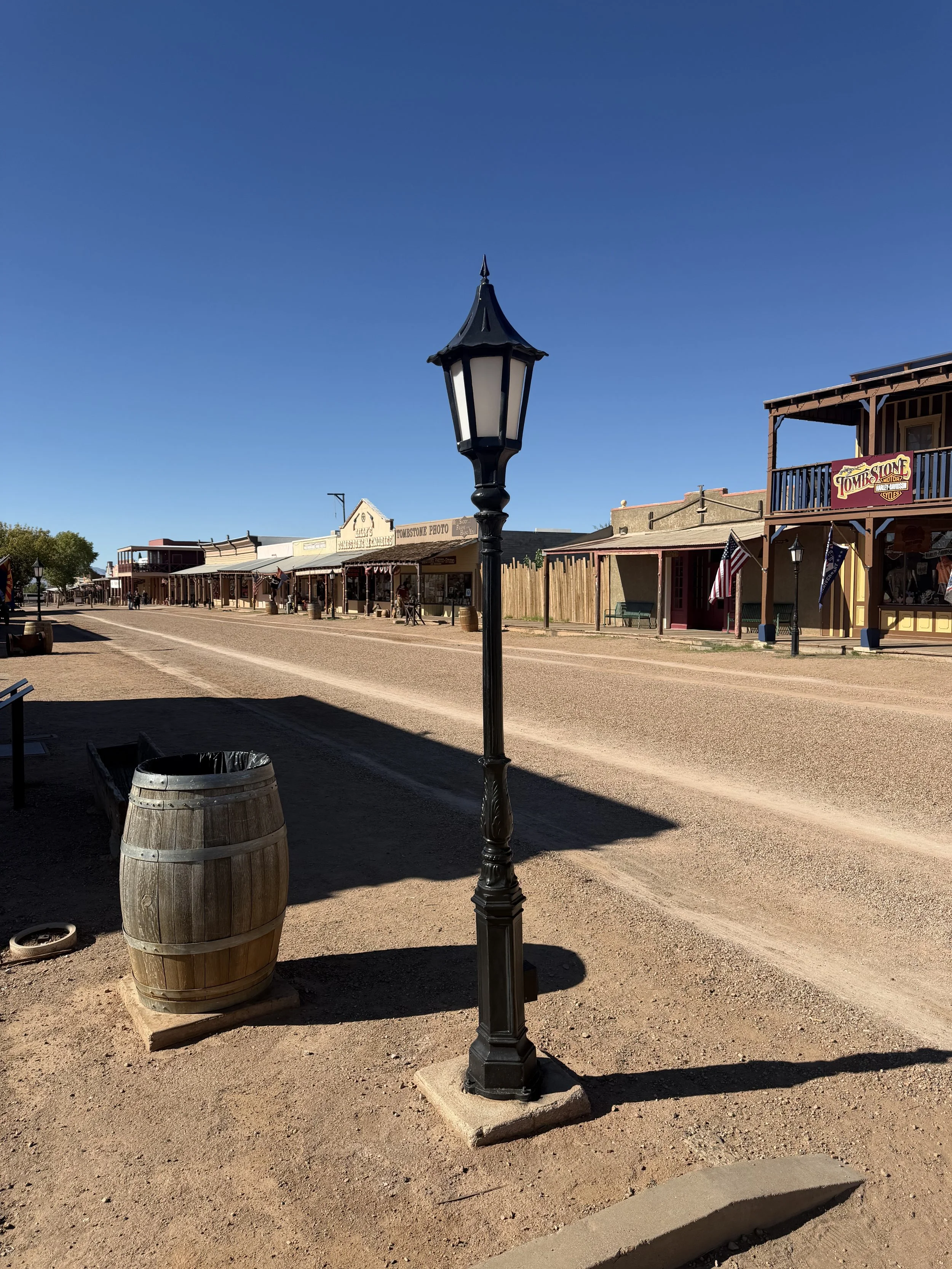
Click on the title above to plan your trip!
Take a DRIVE THROUGH Warren
In May 1905, the Calumet & Arizona Mining Company organized the Warren Realty and Development Company to begin development on the town of Warren (named for George Warren, one of the original discoverers of copper at Bisbee). This was to be Arizona's first planned community - a remedy to overcrowding and lack of space for growth in nearby Bisbee.
The concept of "City Beautiful," which integrated the town's essentials with pleasing aesthetics, including the half-mile long Vista Park in the middle of town, was laid out in a wedge shape on an alluvial fan to take advantage of natural drainage. Ground broke on October 6, 1906.
On January 7, 1907, the Warren townsite was officially opened to the public. That same year, the first buildings and a modern water and sewage system were completed. On March 12, 1908, the Warren-Bisbee Railway was completed - a fully electric streetcar line to provide an easy link between the two towns. By 1910, Warren was home to 650 people and three years later, it was nearly 1000.
In addition to serving as a suburb of Bisbee, Warren also had its own business district, as well as attractions of its own, including the Warren Country Club and the Warren Ballpark. The Country Club (1908) was among the earliest golf courses in the state. The Warren Ballpark (1909), which is still operational, hosted local teams, competing with others from around the region.
In later years, despite a decline in mining at Bisbee, Warren has held on as a quiet residential community. The Warren-Bisbee Railway ceased operation in 1927, replaced by a bus line that ran until 1971. In 1959, Warren itself was annexed into Bisbee. Today, Warren is home to Bisbee High School and a number of the City's services, as well as several fine historic homes and buildings.
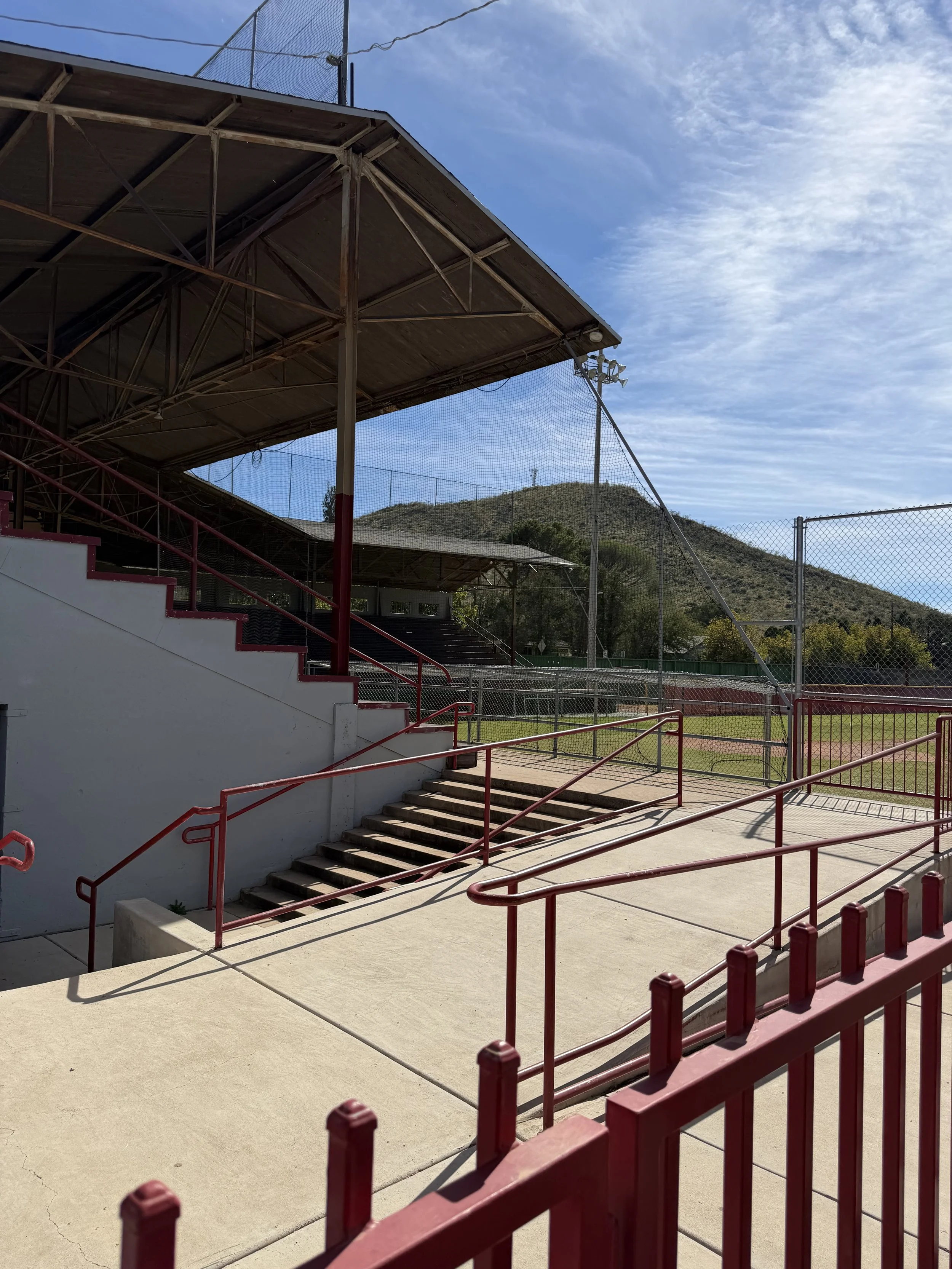
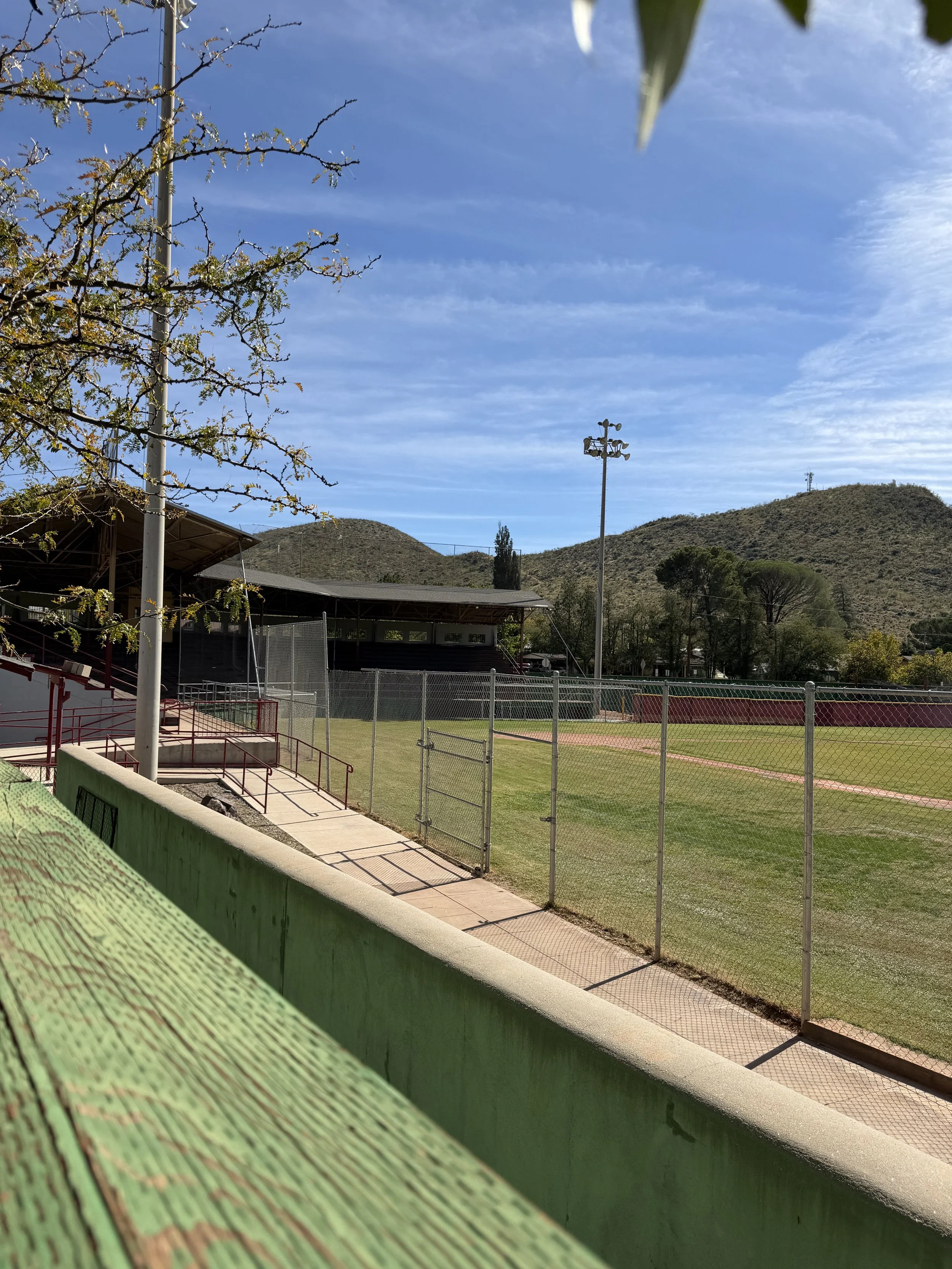
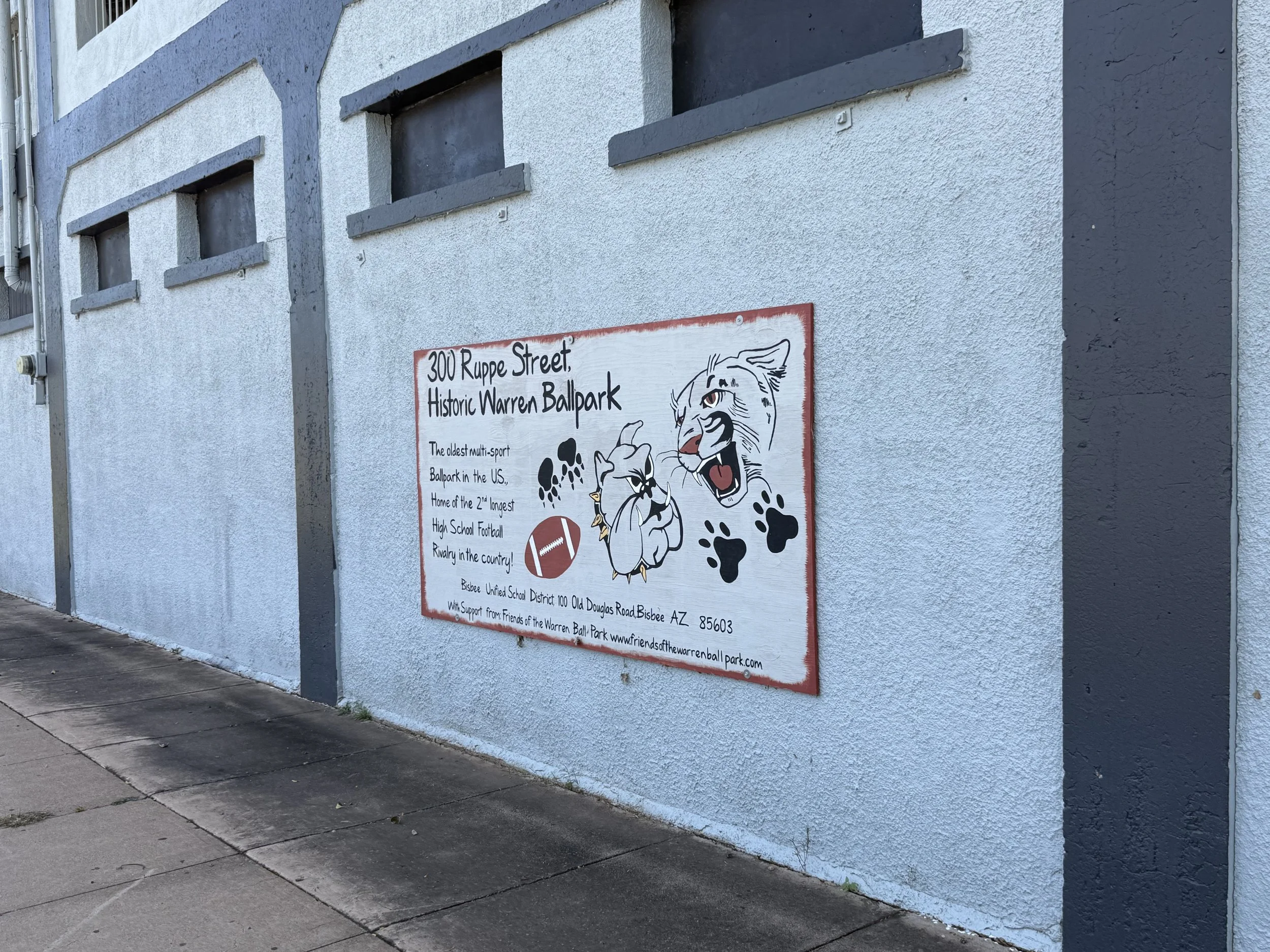
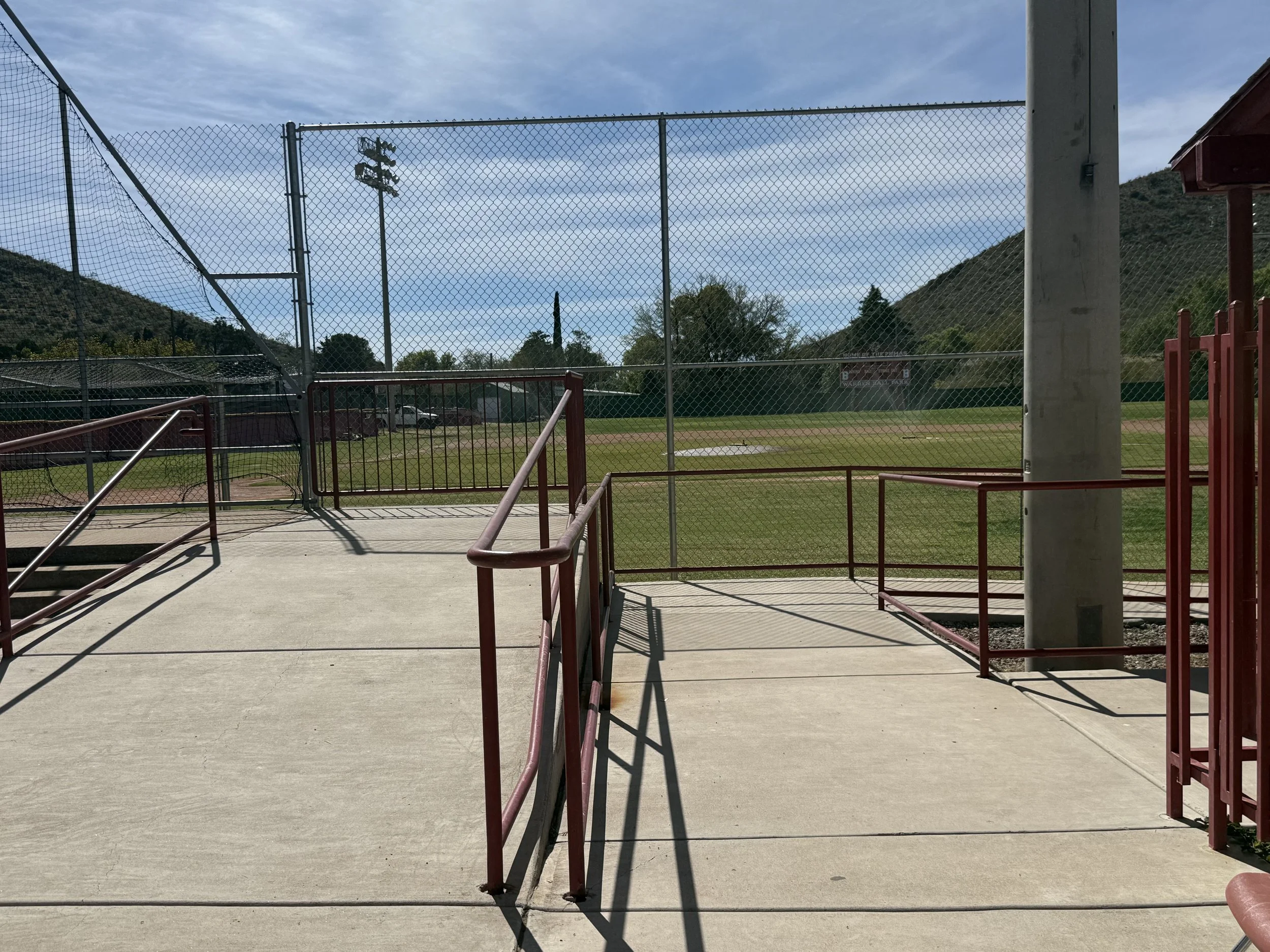
In 1917, the Warren Ballpark became the scene of one of America's most controversial labor disputes. In response to rising racial tension and poor working conditions, the Industrial Workers of the World (IWW) union organized a strike on June 26th. More than 3000 miners, 85% of Bisbee's workforce, went on strike. On July 11th, executives from the Phelps Dodge Corporation, the largest mining company in Bisbee, met with Cochise County Sheriff Harry Wheeler and a posse of 2200 men to plan a mass deportation of the striking miners. The following morning, the posse raided Bisbee and arrested 200 miners and marched them down the hill to Warren, assembling at the Ballpark. Those that were not members of the IWW were given the option to return to work, which roughly 700 agreed to. The remaining 1,286 were loaded on cattle cars, provided by the Phelps Dodge-controlled El Paso & Southwestern Railway, and deported to Hermanas, New Mexico - over 150 miles away… and told not to return.
Casual cafe serving breakfast and lunch bites, plus coffee drinks and tea.
The Bisbee Seance Room
Join your host, MAGIC KENNY BANG BANG, as you are whisked back in time in his cozy Victorian parlor for an intimate, one hour magic show and introduction to the mysterious history of Bisbee, Arizona, one of the most haunted towns in America.
Walk Around Bisbee
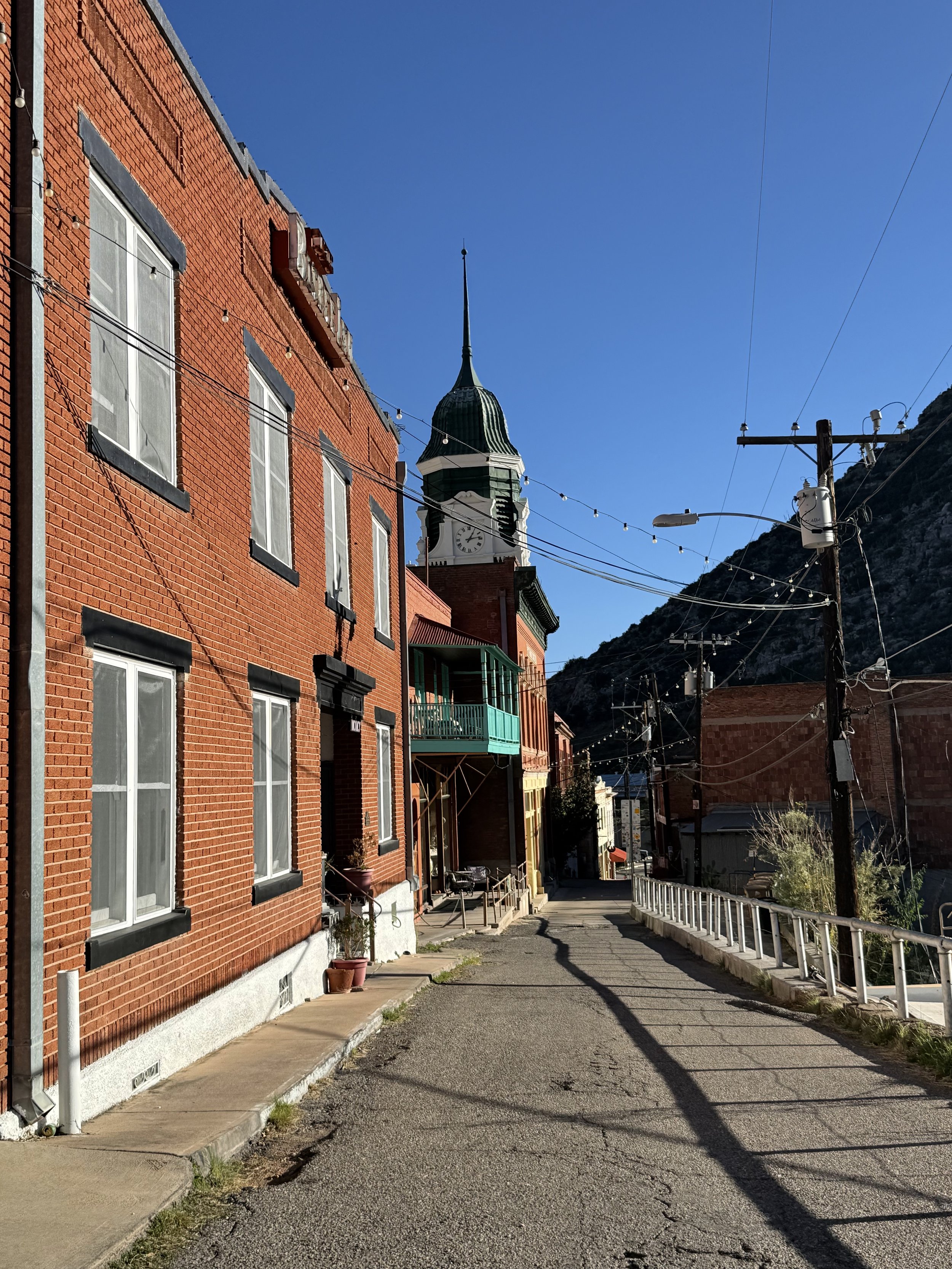
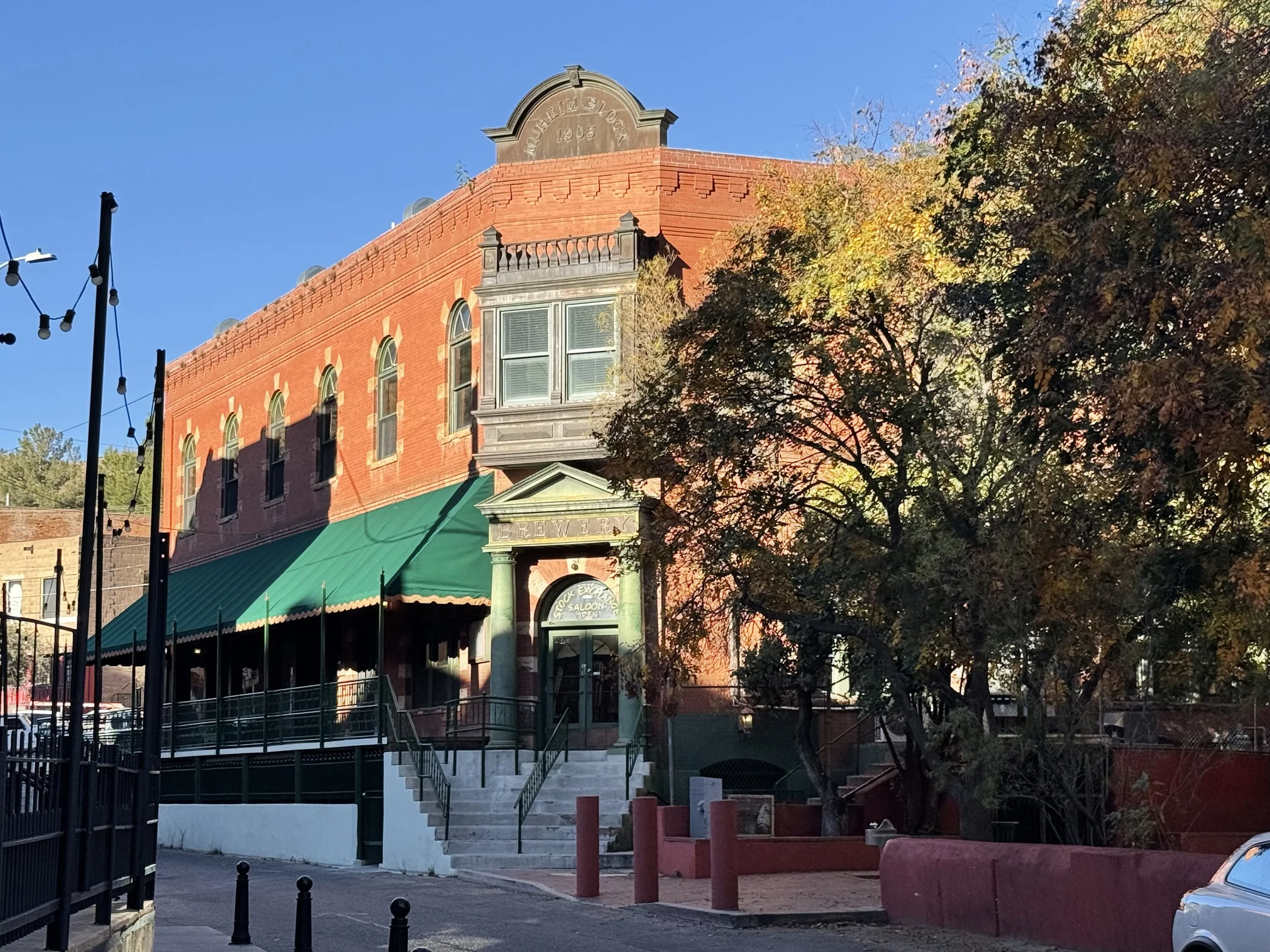
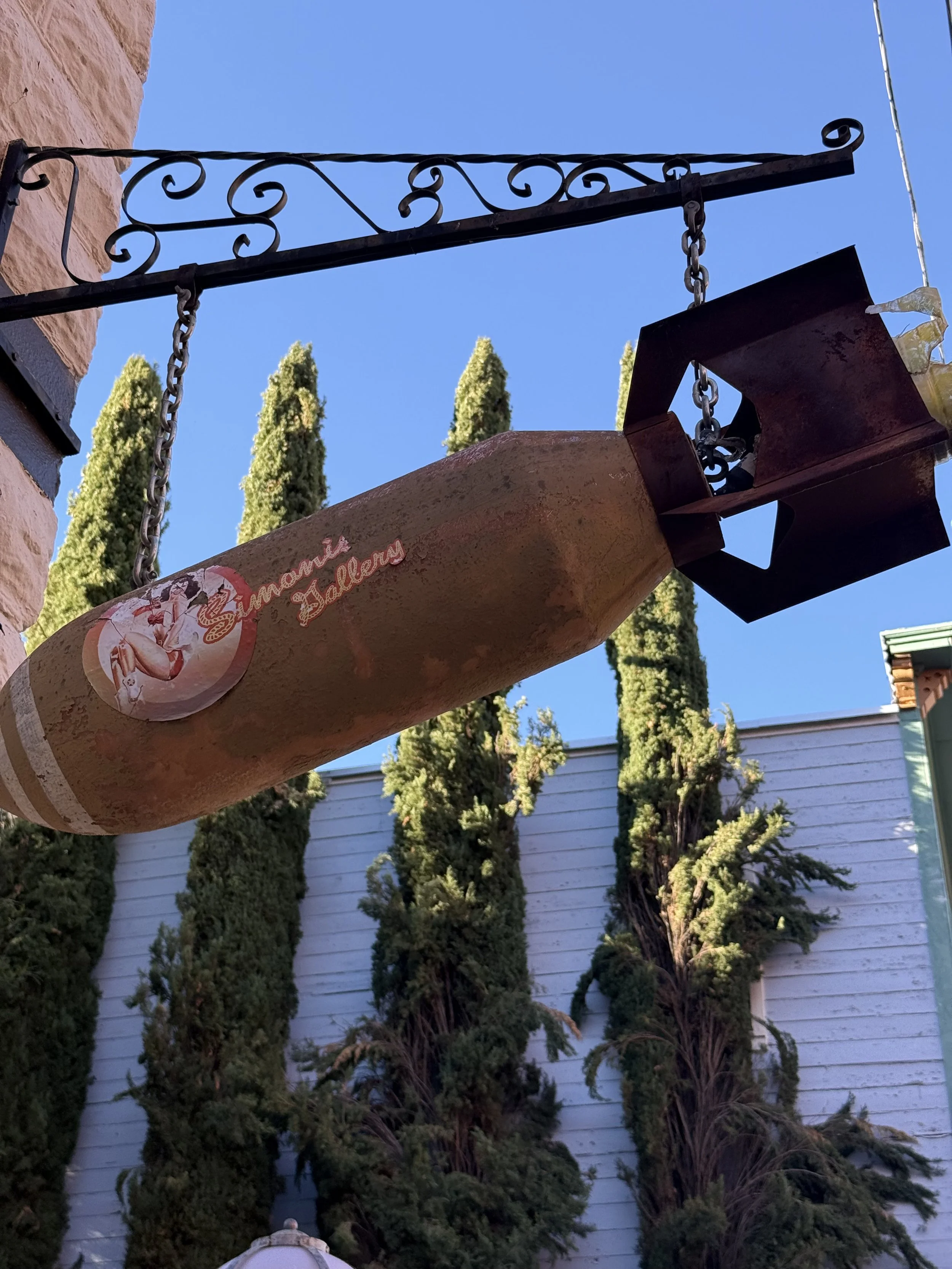
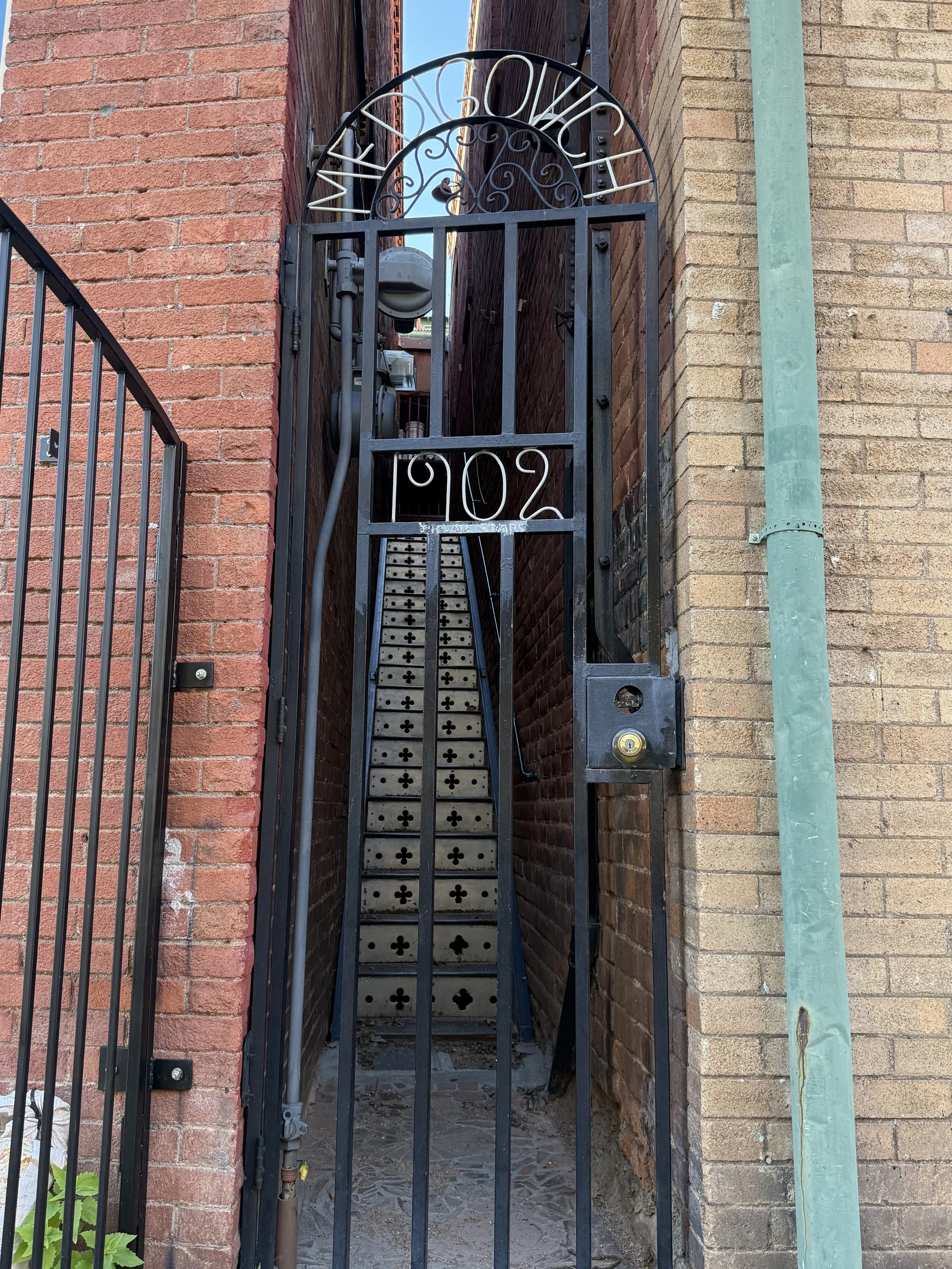
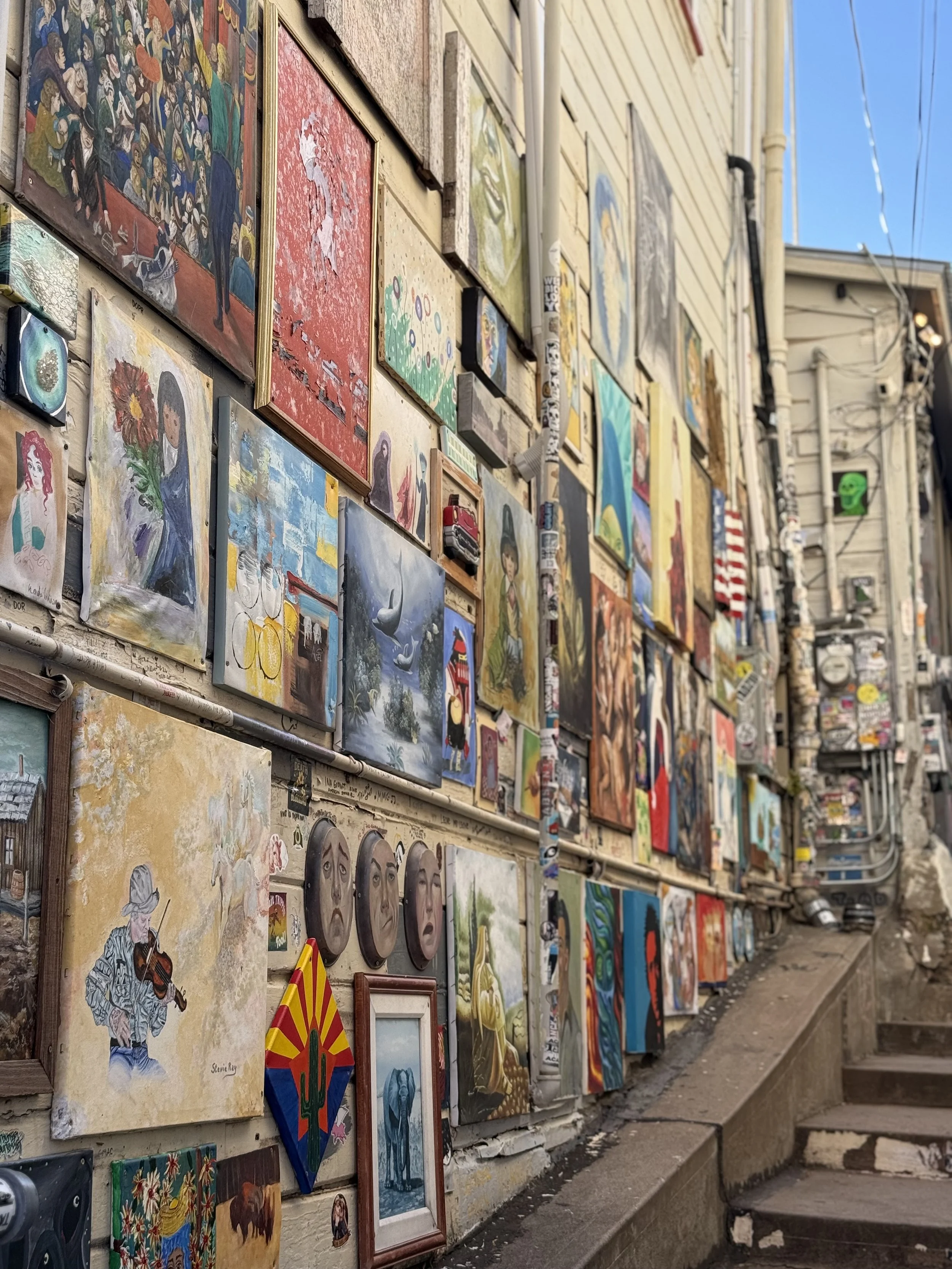
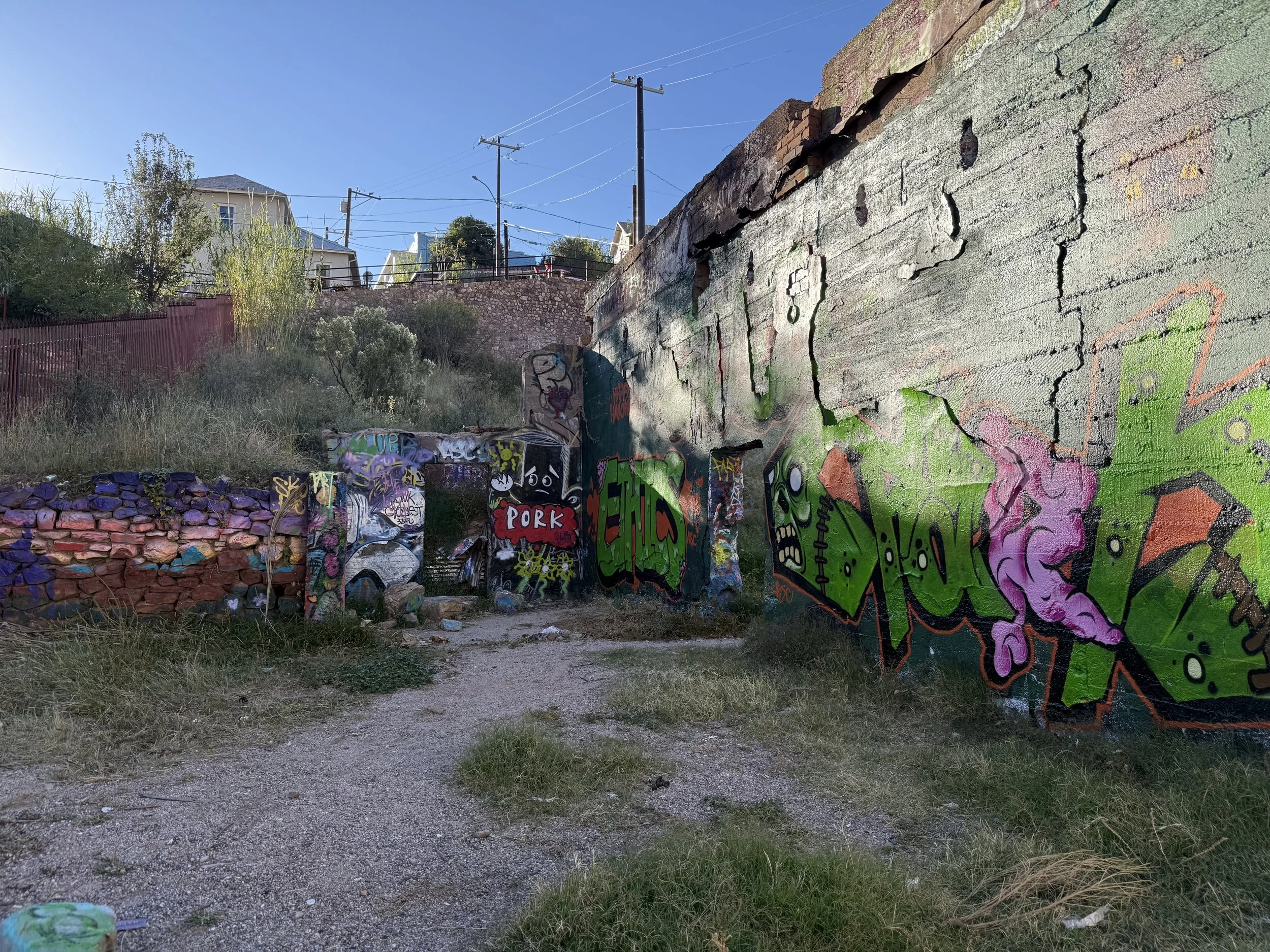
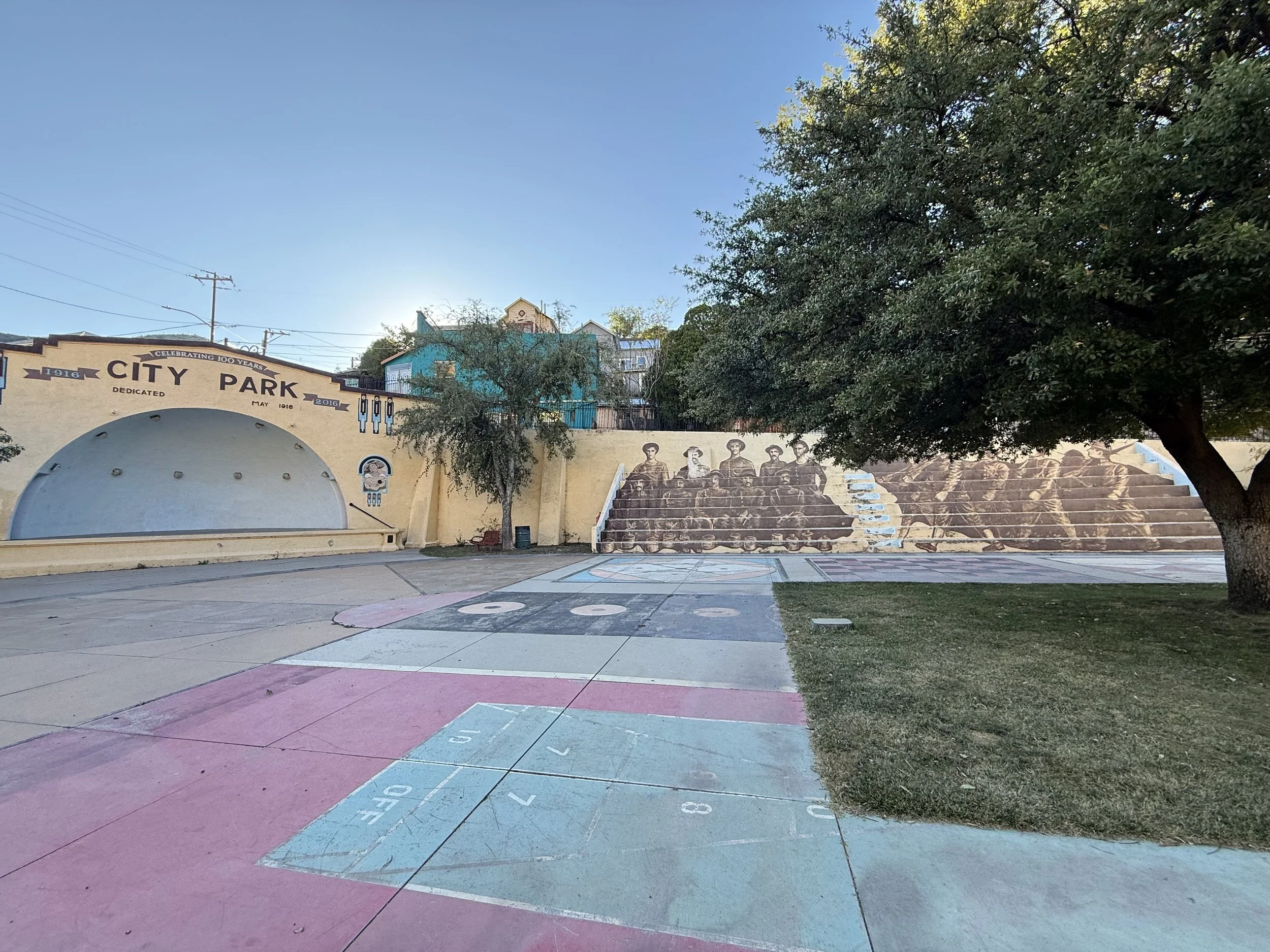
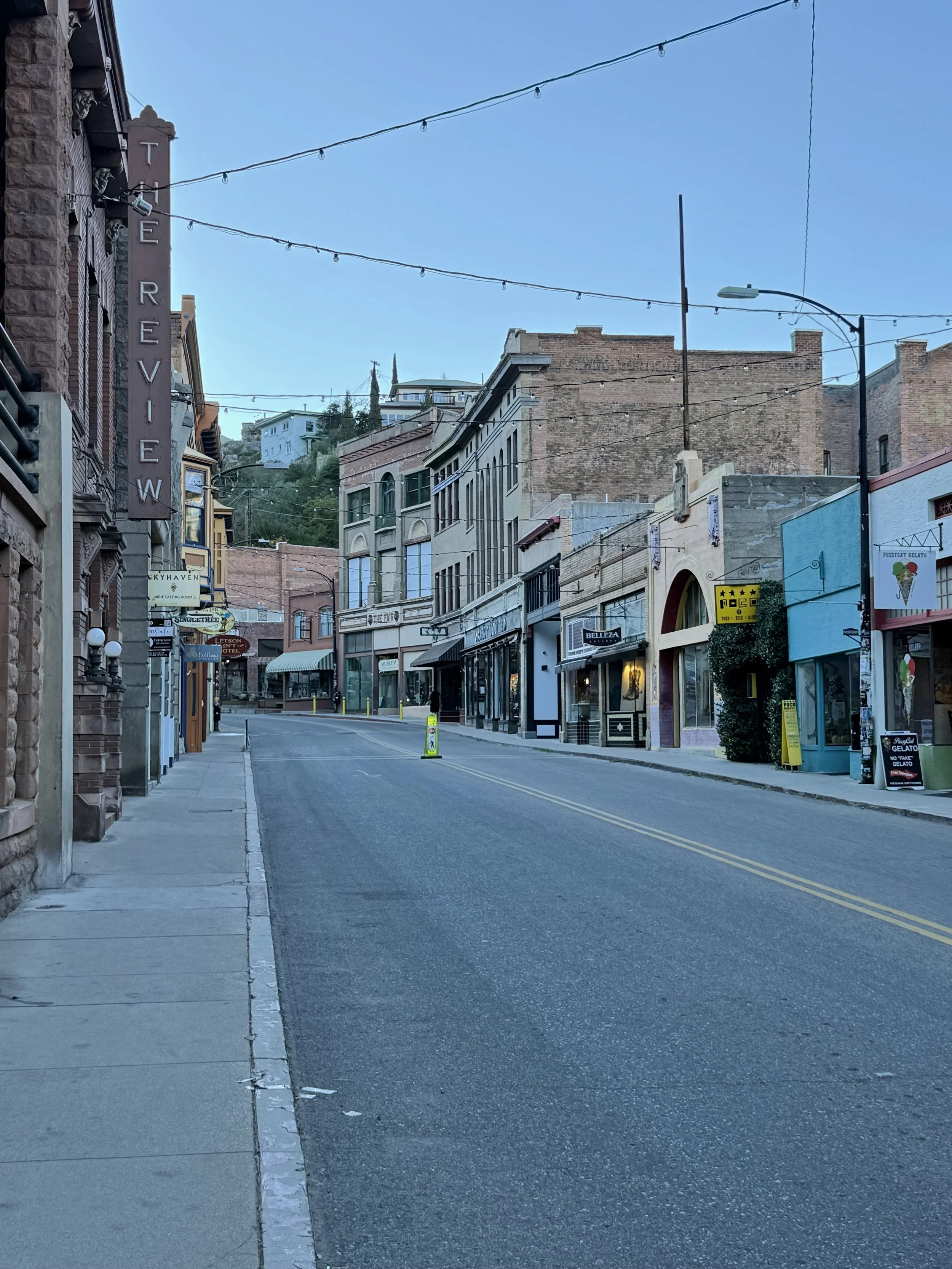
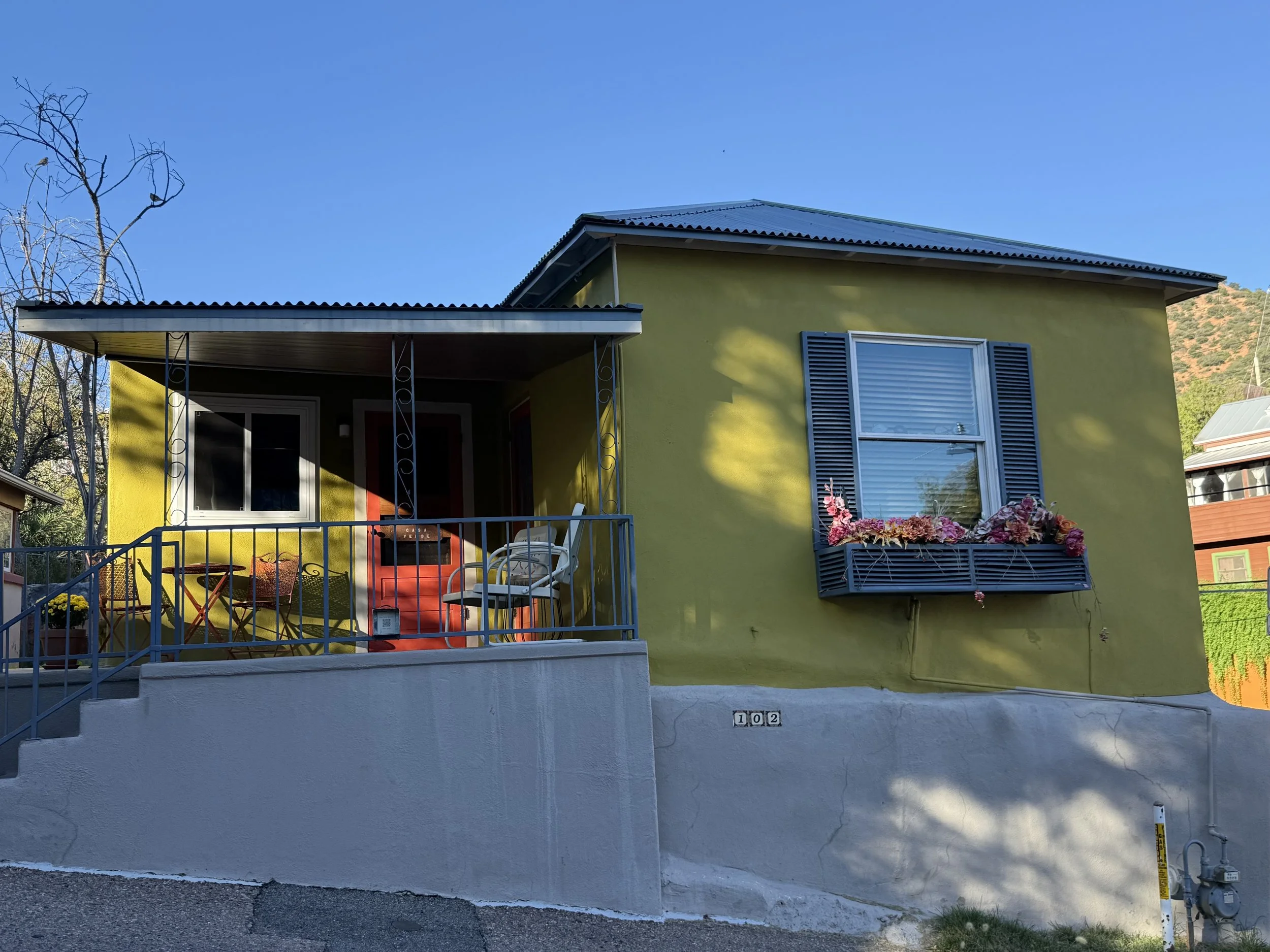
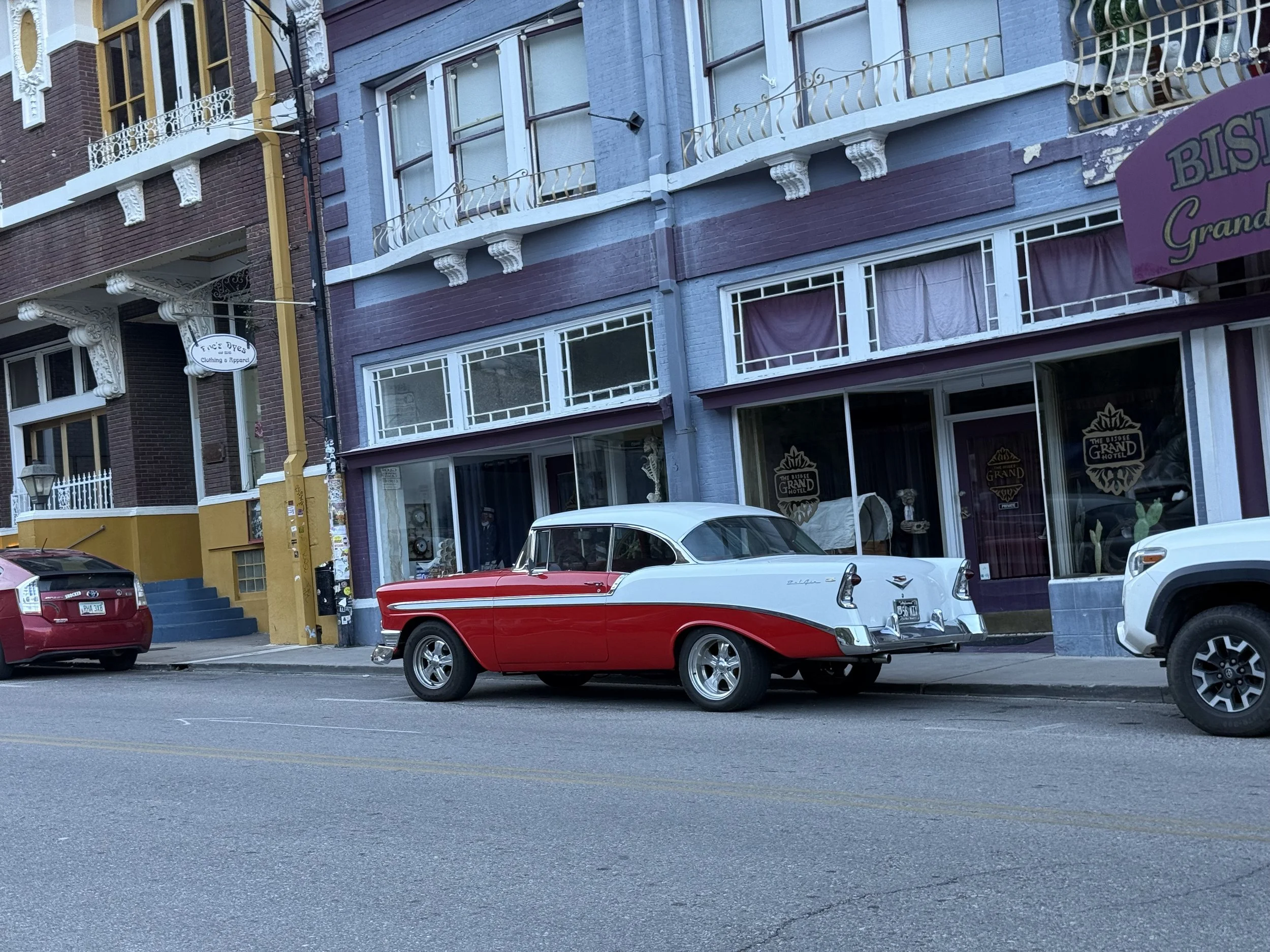
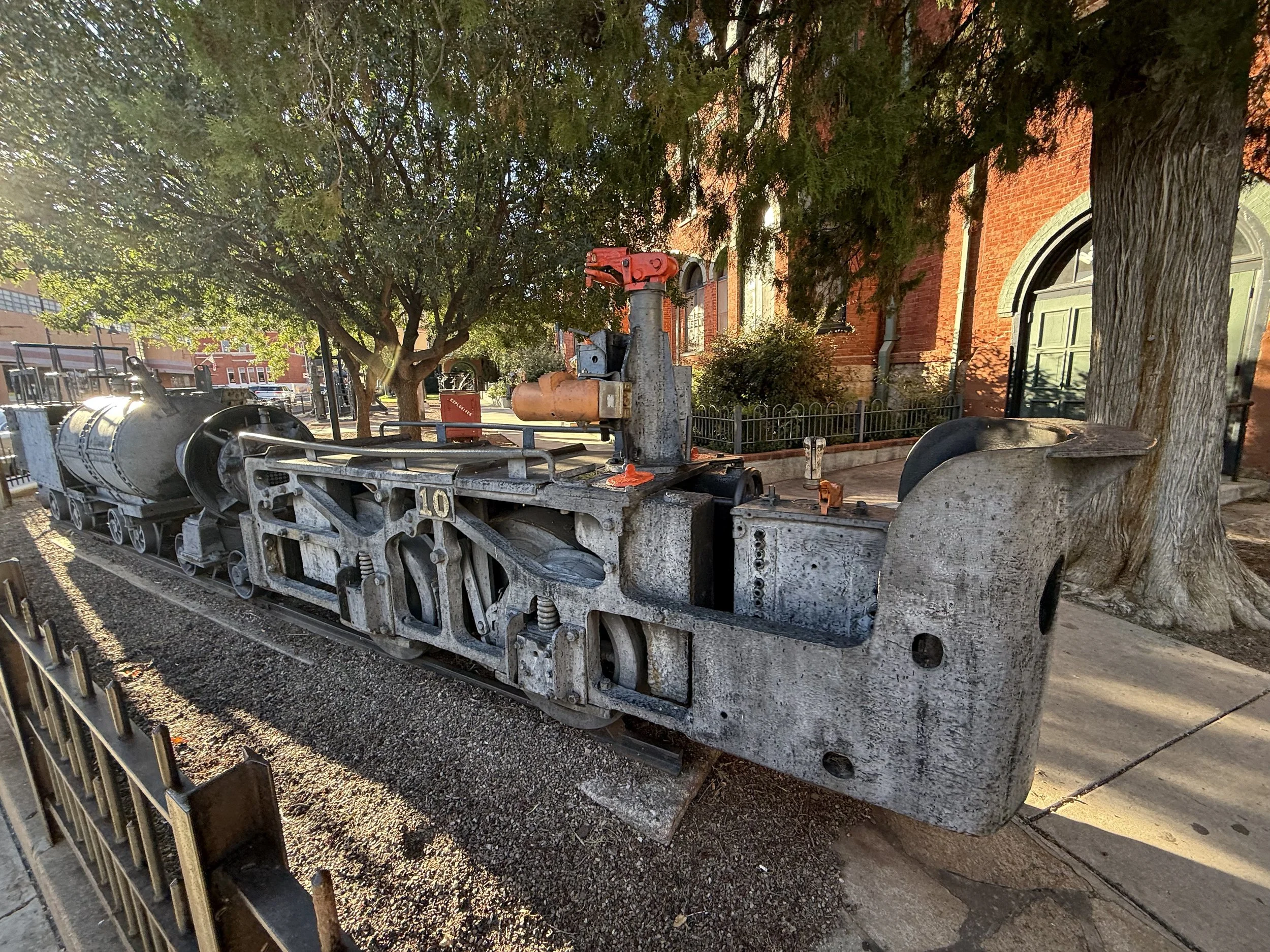
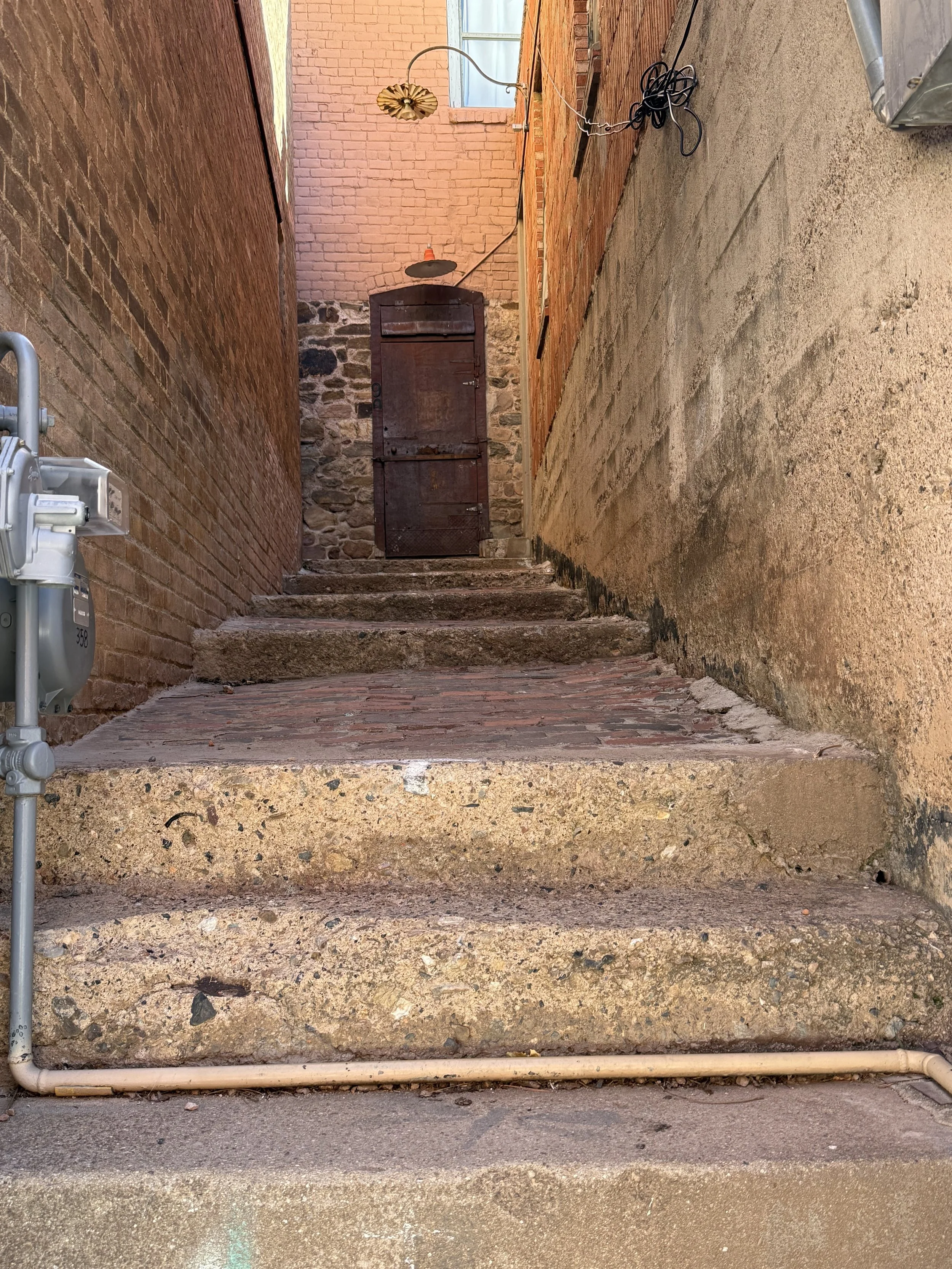
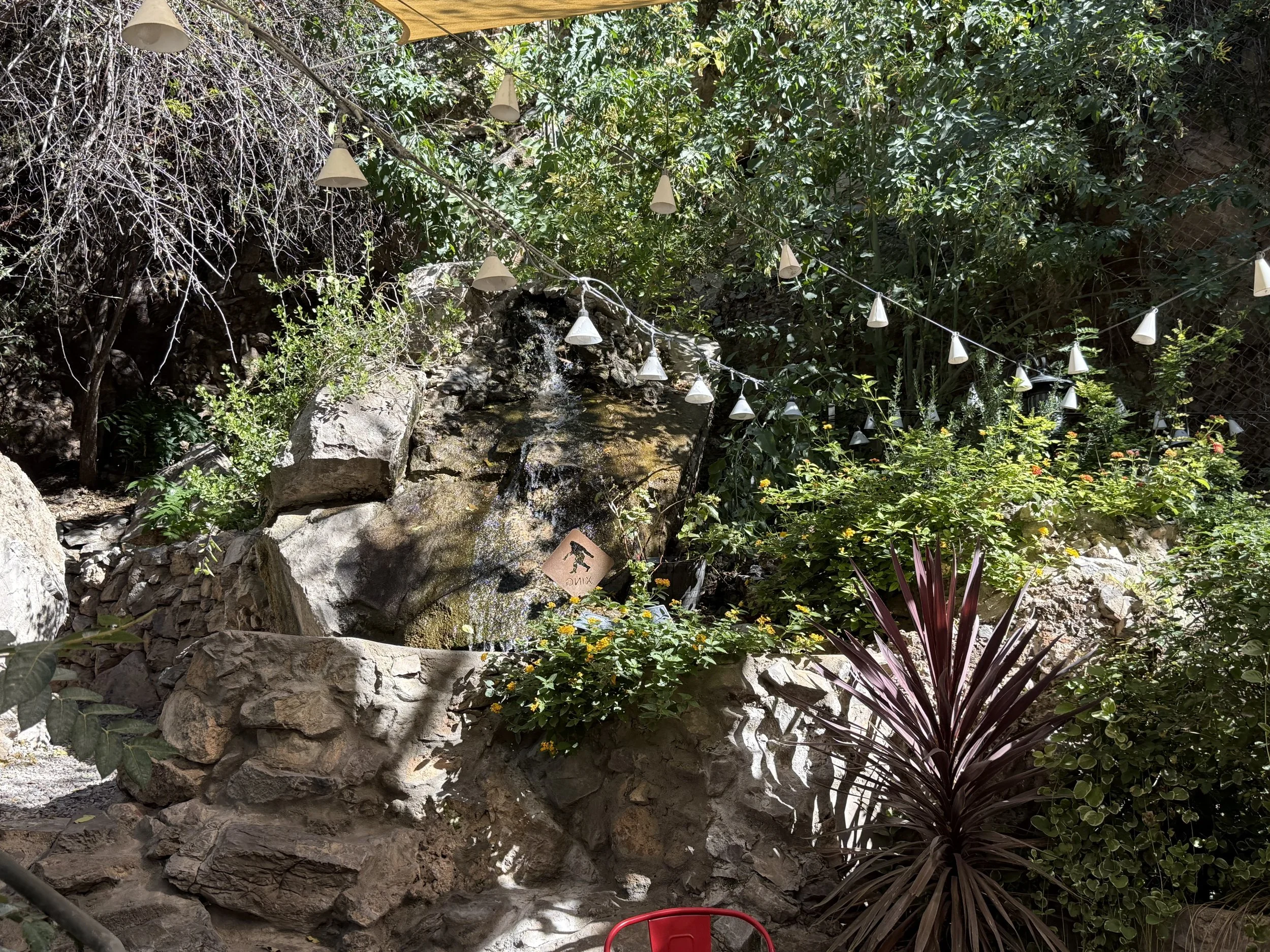
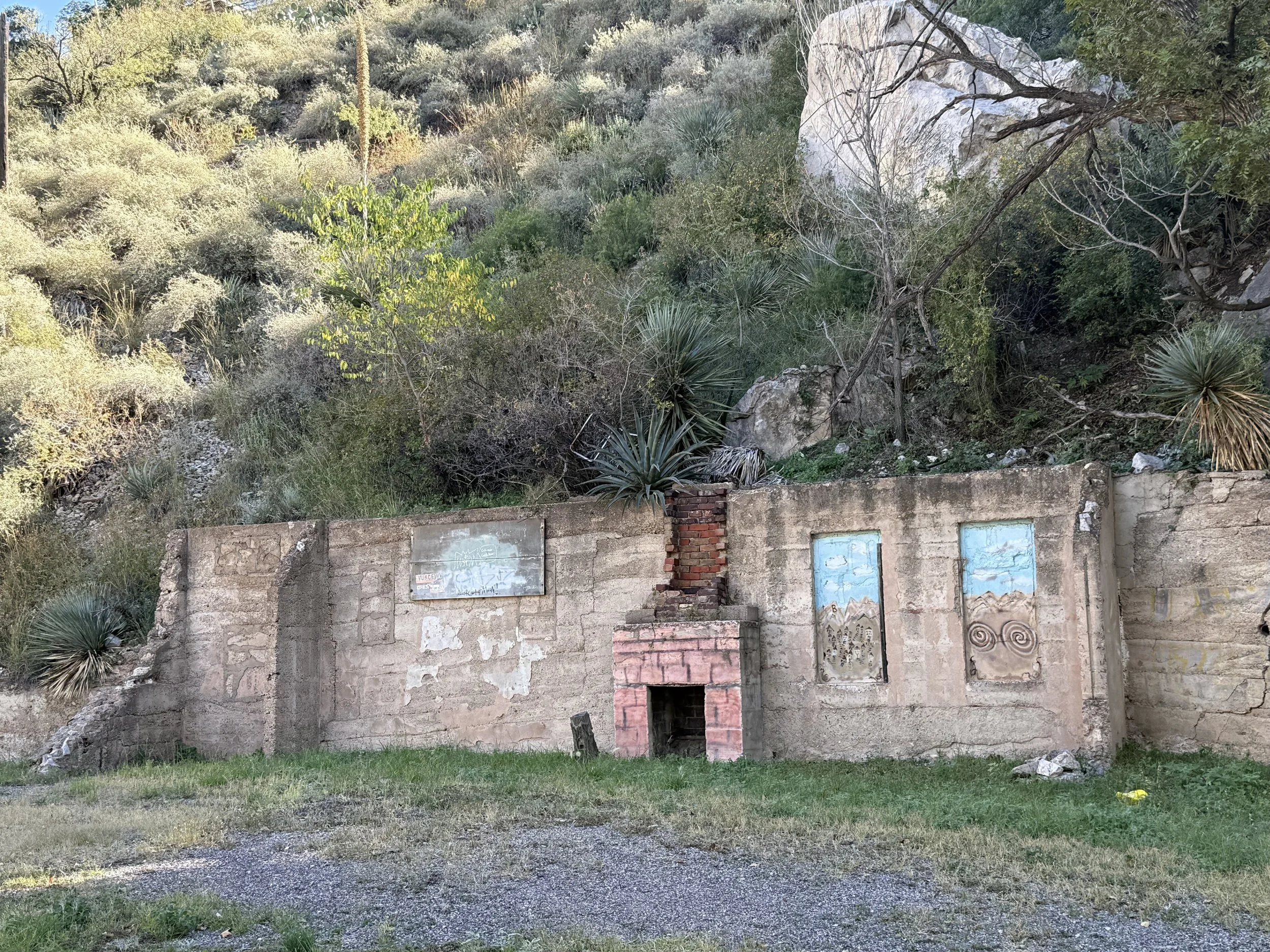
Even just taking a walk around the town can be fun! There are so many well-preserved signs and buildings, along with a lot of local art, which makes for a well-spent couple of hours.
A History Summary
1877 - A reconnaissance detail of army scouts and cavalrymen were sent to the Mule Mountains to search the area for renegade Apaches. Instead, they found the presence of lead, copper and possibly silver.
1880 - Bisbee was founded as a copper, gold, and silver mining town, named in honor of Judge DeWitt Bisbee - one of the financial backers of the adjacent Copper Queen Mine.
1881 - German-Swiss immigrants in the town founded the first breweries in what became known as Brewery Gulch, on Brewery Avenue.
1883 - Known as the “Bisbee Massacre”, six outlaws, who were part of the Cochise County Cowboys, robbed a general store, killing five people. John Heath, who was accused of organizing the robbery, was tried separately and sentenced to life in prison. The other five men were convicted of murder and sentenced to hang.
1889 - The railroad arrived.
1902 - A city charter was approved and the City of Bisbee was incorporated. A temporary city council was formed and went to work on implementing sanitation, clean water, medical care, building codes and fire protection.
1908 - A fire ravaged most of the city but was rebuilt completely within two years.
1910 - The city was considered the largest in the territory with over 9,000 people.
1914 - The saloons had to close up due to Prohibition.
1917 - Open-pit mining was successfully introduced to meet the copper demand during World War I. In addition, 1,300 mine workers went on strike for better working conditions and being part of a union, which resulted in an ultimatum by a deputized posse and the mining company itself, Phelps Dodge. If the workers refused to get back to work, they were arrested and taken Warren Baseball Park before being loaded onto cattle cars and deported 200 miles to Tres Hermana, New Mexico.
1919 - Part of the “Red Summer of 1919”, where violent racial riots broke out, the Bisbee Riots were unique as instead of civil riots, it was against police and military.
Following a confrontation between a military policeman and some of the Buffalo Soldiers, the situation escalated into a street battle in Bisbee's historic Brewery Gulch. At least fifty soldiers were arrested, eight people were seriously injured, and one bystander was killed.
1929 - The Cochise County seat was relocated from Tombstone to Bisbee.
1950-1960 - Around 3800 people lived in Bisbee in the 1950s but that number grew by 160% the following decade, due new kinds of people moving into town, namely artists and the hippie culture.
1970 - Artist Stephen Hutchison and his wife, Marcia, purchased the Copper Queen Hotel from the Phelps-Dodge mining company. Hutchison began to market Bisbee as a destination of the "authentic," old Southwest. His work attracted the developer Ed Smart and eventual investor, Actor John Wayne.
1975 - The Phelps Dodge Corporation halted its Bisbee copper-mining operations and with the help of the Bisbee Mayor, implemented development of a mine tour and historic interpretation of a portion of the Copper Queen Mine as part of an effort to create heritage tourism as another economic base to compensate for the financial loss.
1976 - The Queen Mine Tour was officially opened to visitors.
1990s - Additional people were attracted to Bisbee, leading it to develop such amenities as coffee shops and live theatre. Many of the old houses had been renovated, and property values in Bisbee now greatly exceed those of other southeastern Arizona cities.
2024 - An electrical fire broke out and collapsed a few of the historic buildings in town. Most everything has been rebuilt as of 2026.
FUN FACT - The following movies were filmed here:
Cannonball Run II (1984)
Cold Feet (1989)
Roswell (1994)
Violent Saturday (1955)
World Gone Wild (1988)
Young Guns II (1990)
Bisbee '17 (2018)
Groom Lake (2002)
Miracle Valley (2021)
Lucky U Ranch (2016)
Four Eyes and Six Guns (1992)
